Courage and Understanding

“When you fight for justice, others will follow.”

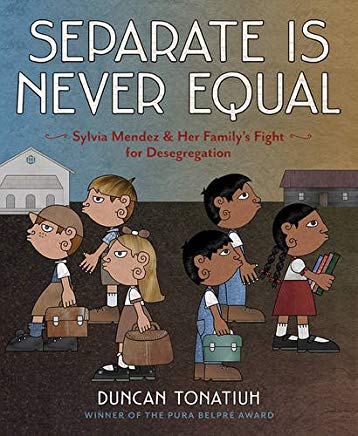
Separate is Never Equal, Duncan Tonatiuh
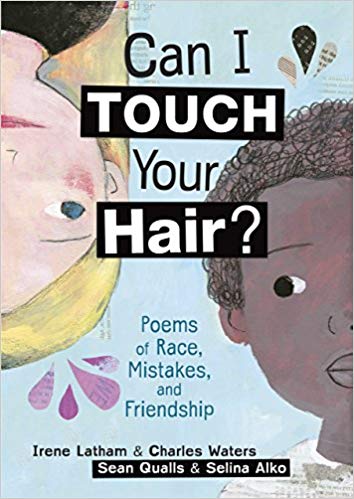
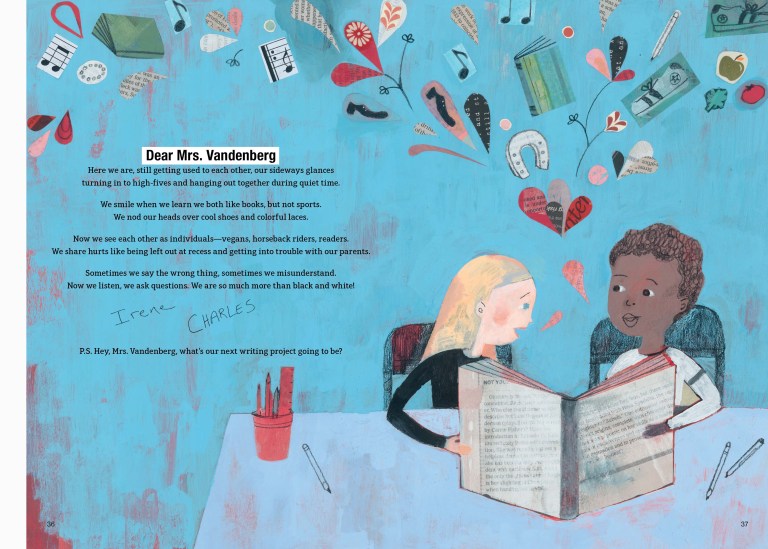
Can I TOUCH Your Hair? Poems of Race, Mistakes, and Friendship, written in 2018 by Irene Latham and Charles Waters and illustrated by Sean Qualls and Selina Alko, follows fifth-grade versions of Irene, who is White, and Charles, who is Black, in a contemporary elementary school. When the two get paired together for a poetry project in class, both seem unexcited, to say the least: “Charles is the only one left. … Now I’m stuck with Irene?” (p. 4-5). But the two, who at first do not know each other too well, find some surface-level commonalities to write about as a starting point—shoes, hair, school, church. Eventually, they find they have even more in common—feelings of being left out, a range of emotions about things heard on the news, being punished by parents, methods for handling fear, and a love of reading. “Sometimes we say the wrong thing, sometimes we misunderstand. Now we listen, we ask questions. We are so much more than black and white!” (Latham & Waters, p. 36). Written completely in prose, Latham and Waters, complemented by Qualls and Alko, beautifully and eloquently demonstrate how children think about race, identity, and friendships.
Can I TOUCH Your Hair? was written by a Black author and a White author, and illustrated by a Black illustrator and a White illustrator. These pairings serve to better capture the experience that the book hopes to accomplish: how do we view one another from a racial standpoint and how do we come together to create something beautiful? Often, when it comes to racial discussions, we are encouraged to not bring it up with children for fear of students being confused or too immature; however, children know much more than we tend to think they do. Students need to be able to “reflect on both their personal knowledge or experiences with racism in today’s America and … the history of civil rights and the current state of the movement” (Smith-Buster, p. 110). This book is an excellent starter to begin to have those conversations with students and to allow them to do such reflection. According to the author and illustrator bios on the book jacket, Latham and Waters “believe poetry can start conversations and change lives. With a little courage and understanding, together we can make the world a better place” (2018). I couldn’t agree more!
Duncan Tonatiuh’s biography, Separate is Never Equal: Sylvia Mendez & Her Family’s Fight for Desegregation (2014) recognizes the landmark desegregation case of 1946 Mendez v. Westminster that took place seven years before Brown v. Board of Education. A Mexican author, Tonatiuh writes from the perspective of a Mexican-American girl Sylvia Mendez, who at the time of the case was just eight years old, as she struggles with the racism and inequality of being denied public education in the “white” school. Eventually, with the hard work of Sylvia’s family, a good lawyer, and the help of the community, the state of California deems this to be unconstitutional and all public schools must become integrated. As an adult, Sylvia is now an American civil rights activist who continues to share her family’s story and fight for school integration. Separate is Never Equal is now a Pura Belpré honor book for its success in portraying, affirming, and celebrating the Latinx cultural experience in an outstanding work of literature for children and youth. Please enjoy the video below which features an interview with the author/illustrator Duncan Tonatiuh!

Critical race theory (CRT) suggests that “racism is mundane and everywhere rather than aberrant and sporadic … the majority of racism remains hidden beneath a veneer of normality and it is only the more crude and obvious forms of racism that are seen as problematic by most people” (Marshall, p. 79). Hidden under that “veneer of normality” includes children’s picture books, which too often present “implicit and explicit misrepresentations about Indigenous peoples and people of color that, because of their repetition across time and media, seem unremarkable” (Marshall, p. 79-80). To combat this mundane racism found in children’s books, Tonatiuh, Latham, Waters, and other contemporary authors use counter-storytelling to tell the stories of people, including people of color, whose experiences are often untold or misrepresented, and to expose and challenge the majoritarian stories of racial privilege (Marshall, p. 80).

For example, Latham and Waters use Can I TOUCH Your Hair? as a counter-narrative that represents authentic voices to critique dominant cultural assumptions. Both Irene’s and Charles’ portrayals in the book serve to challenge and dismantle stereotypes: Charles excels at writing, Irene “begged for an Afro” when she was little (p. 8), Charles is bad at basketball but “words gush out of [his] mouth, smooth and fast like the River Jordan” (p. 14), Irene wants to play freeze dance with the Black girls at school. All of these things counter the stereotypes surrounding both Black and White people, specifically Charles. Charles is supposed to make bad grades, play video games, say things like, “You ain’t,” or “You is,” or “I’m doing good” (p. 22), and is even asked by a White student why he “always [tries] to act like one of [them]” (p. 22), as if acting in certain ways is what makes a person Black or White.
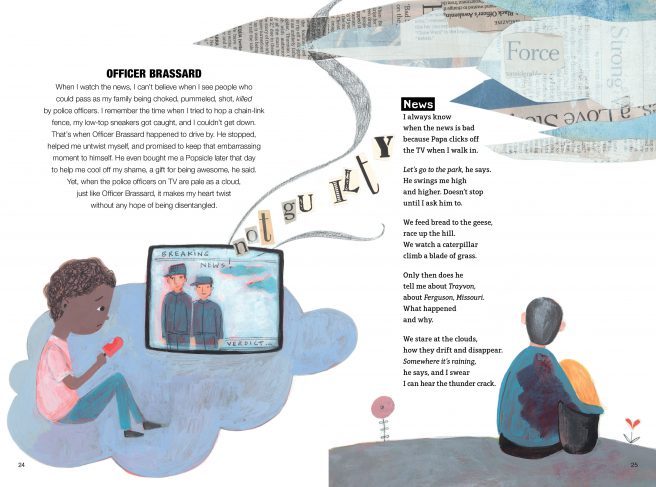
The book also counters the idea I discussed above that children do not or cannot understand themes about race. In poems like “Church,” “Sunday Service,” “Forgiveness,” “Apology,” “Officer Brassard,” and “News,” it is obvious that children do, in fact, understand issues surrounding race, racism, and racial inequalities. In an interview by Libby Stille (2018), Waters said, “Irene’s poem “News” is [his] favorite of the book. She wrote about police brutality with such sensitivity, [he] tried [his] hardest to match that depth of feeling in [his] response poem, ‘Officer Brassard.'” The two poems mentioned by Waters (see above, p. 24-25), illustrate the thoughts and feelings children might have about the horrible things on the news such as police brutality, specifically toward Black people. The contrast between Charles’ poem and Irene’s poem help readers understand the different ways we understand violence and injustice through our own racial lens.

Separate is Never Equal also serves to use counter-storytelling as a tool for analyzing racial privilege through a CRT lens. In her article, “Counter-Storytelling through Graphic Life Writing” (2016), Elizabeth Marshall uses the term “graphic life writing to refer to the construction of a life story through image and text in forms such as the picture book or comics” (p. 79). She continues to say that, “Graphic life writing represents one way to deepen an understanding of school as an institution with a history that continues to segregate and exclude youth because of their ethnic and/or racial backgrounds” (p. 80). In her article, Marshall examines the ways in which Tonatiuh’s illustrations provide a counter-narrative for people of color in the United States.
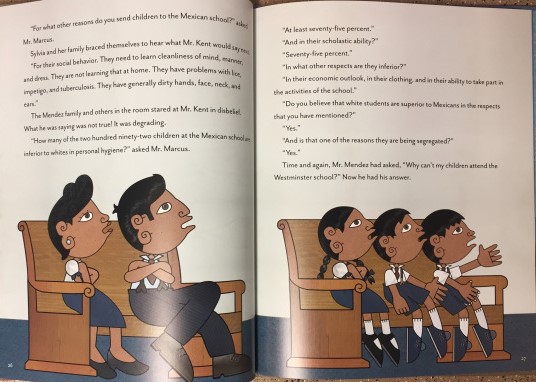
p. 26-27

On pages 26-27, the lawyer representing the Mendez family, Mr. David Marcus, asks one of the superintendents who sent the Mendez children to the Mexican school, Mr. Kent, why? Mr. Kent claims that he did so because the Mendez children “need to learn cleanliness of mind, manner, and dress,” calling them dirty, unintelligent, and generally inferior to the White children attending the school. Tonatiuh’s illustrations depict the Mendez family’s shock and outrage at Mr. Kent’s racist words: both parents and Sylvia’s arms are crossed, Sylvia’s brothers put their arms up in frustration, and all mouths hang open in disbelief. “Time and again, Mr. Mendez had asked, ‘Why can’t my children attend the Westminster school?’ Now he had his answer” (p. 27). That answer was based upon the systemic White supremacist ideas that White people are inherently better than people of color. It is important to note, however, that people of color do present difficulty “in their economic outlook, in their clothing, and in their ability to take part in the activities of the school” (p. 27) because they are not welcomed into the school with better resources; this creates a never-ending loop of feelings of inferiority and of supremacy for people of color and White people respectively.
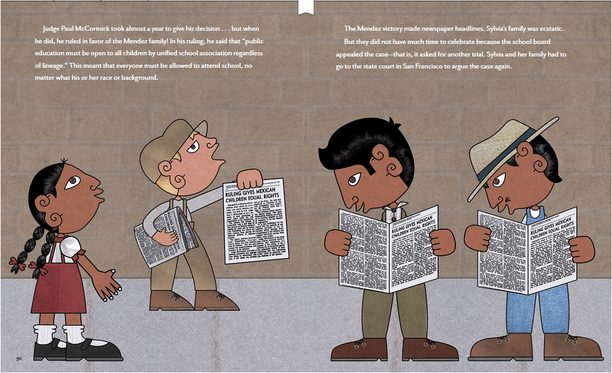
p. 30-31

Tonatiuh confronts the racism and stereotypes presented by Mr. Kent in another double spread on pages 30-31, which illustrate the Mendez victory celebrated in the newspapers. Sylvia is depicted as “ecstatic,” with a smile on her face and her hands uncrossed and extending outward. The spread shows people reading the newspaper that was published saying, “RULING GIVES MEXICAN CHILDREN EQUAL RIGHTS.” This positions the reader to recognize and refute racism and show the activism from Mr. Marcus and the Mendez family in combating the racist ways of the school districts involved, by showing students the power they have through community and civil activism to make a change in their world.

How can I apply lessons from these books to my own classroom?

These books provide platforms for opening up critical conversations about discrimination, overcoming obstacles and injustices, disrupting stereotypes, and fostering positive conversations about race and identity with students. We must remind students that these injustices surrounding racial identities are still occurring today, whether it be the “unofficial segregation” Tonatiuh mentions in his Author’s Note (p. 36) or the Black Lives Matter movement alluded to in Can I TOUCH Your Hair? (p. 24-25). A good starting point for opening up these critical conversations could be by examining the list of guiding questions adapted from Yosso’s (2005) framework referenced in Marshall’s (2016) article:

  • How does the subject of this auto/biography maintain hopes and dreams in the face of barriers?
  • How do the illustrator and/or author communicate their story in images and words?
  • Does the author include or write in more than one language or dialect? Are certain literary forms used in the book, such as parables or poems?
  • What knowledge or lessons do young people in these auto/biographies use that come from their families and/or communities?
  • What documents, photos, or information do the author and/or illustrator include in their life writing? Why?
  • Upon what networks of people in the community do the author and/or illustrator rely?
  • How do youth navigate through institutions like the school that are not set up for communities of color and/or Indigenous peoples?
  • In what ways (e.g., challenging adults, participating in protests, testifying in court) do youth resist unfair treatment or discrimination?

With all this in mind, remember what Latham and Waters say: “With a little courage and understanding, together we can make the world a better place.”

References
Hinz, C. (2018, March). Writing, editing, and sharing poetry from can I touch your hair?. Interview by L. Stille. Retrieved from https://lernerbooks.blog/2018/03/can-i-touch-your-hair-irene-latham-charles-waters-carol-hinz.html
Latham, I., & Waters, C. (2018). Can I touch your hair? Poems of race, mistakes, and friendship. Minneapolis, MN: Carolrhoda Books.
Marshall, E. (2016). Counter-storytelling through graphic life writing. Language Arts94(2), 79-90.
Smith-Buster, E. (2016). Social justice literature and writing: The case for widening our mentor texts. Language Arts94(2), 108-111.
Texas Bluebonnet Award. (2015, February 15). Separate is never equal Duncan Tonatiuh [Video file]. Retrieved from https://youtu.be/n7-kzJVcOUw
Tonatiuh, D. (2014). Separate is never equal: Sylvia Mendez and her family's fight for desegregation. New York, NY: Abrams Books for Young Readers.
Find the Path. Solve the Puzzle.

“Just because you don’t see the path doesn’t mean it’s not there.”

The Parker Inheritance, Varian Johnson

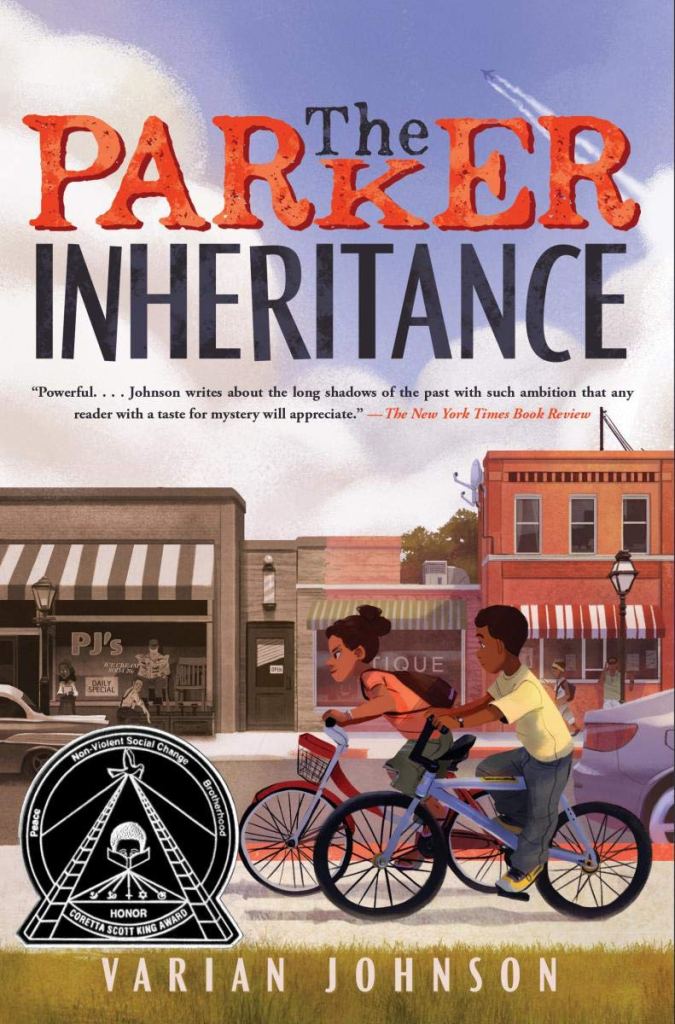
Holy cow, this book! Written in 2017 by Varian Johnson, The Parker Inheritance is the mystery novel every aspiring detective needs. When Candice Miller moves to Lambert, South Carolina for the summer, all she expects is a boring summer away from her friends in Atlanta and rereading the same books from the library over and over. But when Candice finds a letter addressed to her grandmother Abigail Caldwell, with her grandmother’s own handwriting on the envelope—Find the path. Solve the puzzle.—she finds an unsolved mystery from a decade ago, waiting to be solved. But she can’t do it alone. To solve the mystery and find the inheritance it promises, Candice needs help from her new friend from across the street, Brandon Jones. What they then find together is a greater passion for books, Lambert’s ugly past, and a friendship unlike any other.

Varian Johnson describes what his book is all about!
Varian Johnson, author of The Parker Inheritance

Varian Johnson wrote The Parker Inheritance, which was named a 2019 Coretta Scott King Honor Book and a 2018 Boston Globe-Horn Honor Book, in part based on his own childhood growing up. Johnson grew up a Black kid in South Carolina, in a little town called Florence (which inspired the town of Lambert in the novel). Many important aspects of the book are also based on places or events from his childhood, including Perkins High School (based on Wilson High School in Florence, SC), the Perkins-Wallace Tennis Exhibition (inspired by a secret basketball game in 1944 between the North Carolina College for Negroes and the Duke University medical school team, in which the NCCN won by a score of 88-44), Briggs v. Elliot, and more.

How can I apply lessons from these books to my own classroom?

A page on Johnson’s author website also gives readers a look into the story behind The Parker Inheritance. An interaction Johnson and his twin brother had with a police officer in their junior year of high school drove Johnson to write about race relations and the unfair discrimination and hurt that comes with being born Black.

This book addresses many social justice issues throughout its pages, including that of race and discrimination discussed above. These issues are as, if not more, integral to the story in The Parker Inheritance. The novel is written in three different main timelines: Abigail Caldwell’s time attempting to solve the puzzle around 2007, Candice and Brandon’s attempt in 2017, and a time going from around 1914 until about 1986 that details the events that led to the letter being written. It is this latter timeline that helps readers learn more about Jim Crow laws, segregation (“separate but equal”), and deep injustices especially frequent in the deep South during the time. It would be a good idea to discuss with students prior to reading about these social issues, as well as the horrific cruelty that was lynching (Johnson, p.116), and deep-rooted discrimination that Black people in the US have faced since the end of slavery (“I don’t care how many courses you take or how many books you read. You’ll [as a White man] never understand what it means to be a Negro. You’ll never face the discrimination they see every day. You’ll never struggle the way they do,” Johnson, p. 170).

In Candice and Brandon’s modern-day timeline, the continuance of racist systemic social injustices is displayed for readers: the occurrence of segregation remaining in schools and neighborhoods despite Brown v. Board of Education ruling it was unconstitutional, the implicit assumptions that Black people are up to something because they “looked suspicious” (Johnson, p. 131-132). This racial profiling is unfortunately all too-familiar for Johnson himself, whose experience with the police officer at the airport (linked above) was based solely on his and his brother’s skin color. Also in this timeline, the fear that Black people have of their cars being pulled over by cops and the fear of being shot (despite being unarmed) is highlighted every time Brandon’s sister Tori drives the duo somewhere.

Even further, The Parker Inheritance steps away from just racial injustice, but also the rights and protections needed for people ho identify as LGBTQIA+. Candice wonders throughout the book if Brandon is gay (which is never answered), and at the end of the book she actually stands up to Brandon’s grandfather for his outdated beliefs and prejudices (“He is perfect just the way he is. … He. Is. Perfect,” Johnson, p. 311-312). Other characters featured in the novel are also gay, including Brandon’s best friend who is away for the summer and Candice’s father. This opens up discussion with students on the topic of loving and accepting LGBTQIA+ people for who they are.

There are just so many different directions and social justice topics you could hit with your students through this book. It is important to keep in mind that you should not use this single text to discuss these topics with students. There should be a vast array of other culturally diverse books and stories in your classroom that reflect your students’ lives, including many featuring Black lives (Boyd, Causey, & Galda, 2014). When you think about your classroom library, pause and ponder (Boyd, Causey, & Galda, 2014):

  • When I select literature, what criteria am I using? How am I including culturally diverse literature in my classroom?
  • What do I need to know and learn about all of my students in order to select and evaluate relevant and appropriate high-quality, culturally diverse literature?
  • What informed decisions about culturally diverse literature do I need to make in order to help my students meet the Common Core State Standards for reading literature?

Be sure also to think about the four ways of connecting texts through different points of consideration (Ciecierski, 2017): companion texts, corresponding texts, contradictory texts, and cluster texts.

The Parker Inheritance is probably one of the best children’s books I’ve read—fun, mysterious, and full of good social justice discussions—and I highly recommend it to anyone for their classroom library.

 References
Boyd, F. B., Causey, L. L., & Galda, L. (2014). Culturally diverse literature: Enriching variety in an era of common core state standards. The Reading Teacher68(5), 378-387. doi:10.1002/trtr.1326
Ciecierski, L. M. (2017). What the common core state standards do not tell you about connecting texts. The Reading Teacher71(3), 285-294. doi:10.1002/trtr.1616
Johnson, V. (2018). The Parker inheritance. Broadway, NY: Scholastic Inc.
Varian Johnson. (2017, May 31). The story behind the Parker inheritance. Retrieved from http://varianjohnson.com/books/the-parker-inheritance/story-behind-parker-inheritance/

Finding Freedom

“This piece of earth was a world apart.

Congo Square was freedom’s heart.”

-Freedom in Congo Square, Carole Boston Weatherford & R. Gregory Christie

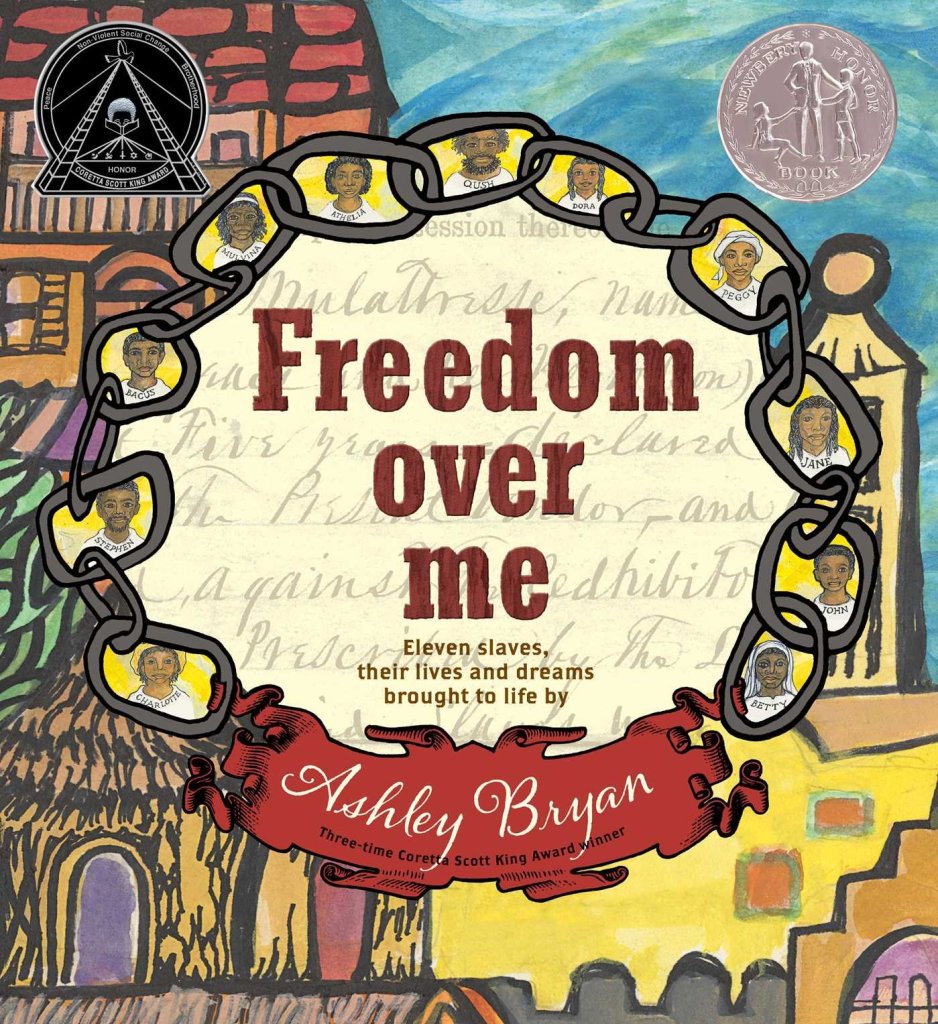
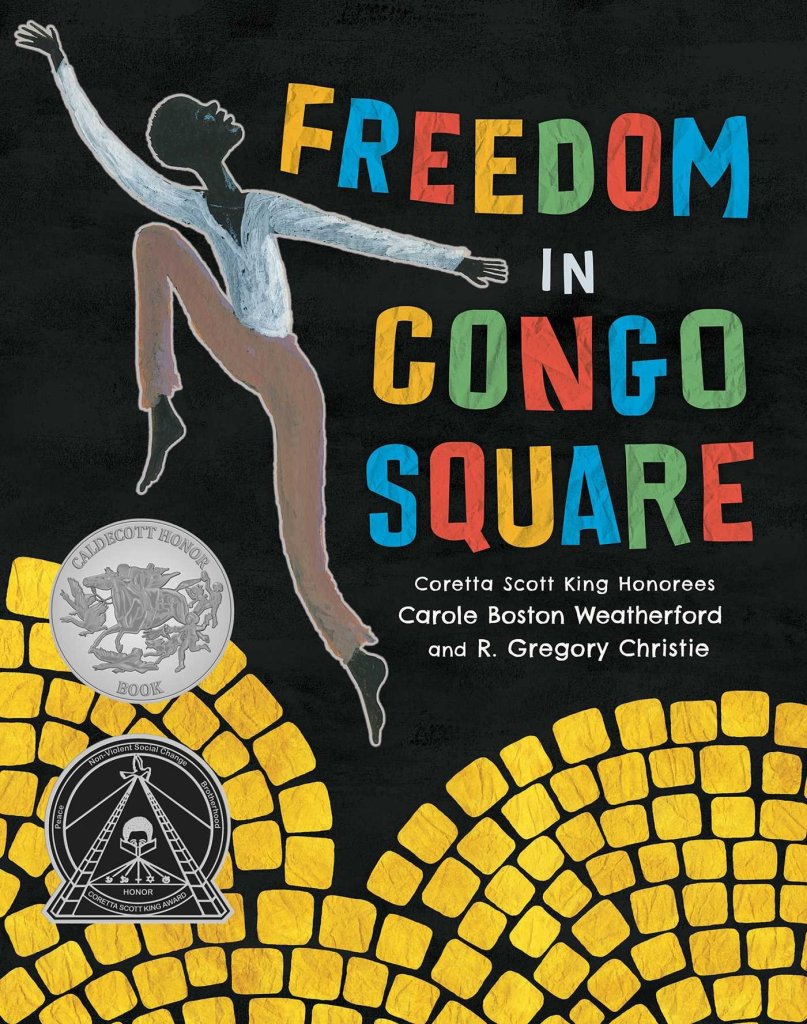
Freedom over me: Eleven slaves, their lives and dreams brought to life (2016), written and illustrated by three-time Coretta Scott King Award winner Ashley Bryan, brings eleven real slaves from the estate of a white woman in 1828 to life, along with the dreams of freedom they may have had. Working from a primary source document—an appraisement estate document for a Mrs. Fairchilds—Bryan uses the sparing information about these slaves (only their names and the price they were being sold for) to imagine their backgrounds, thoughts, and dreams and bring them to life as not just property to be sold, but as human beings.

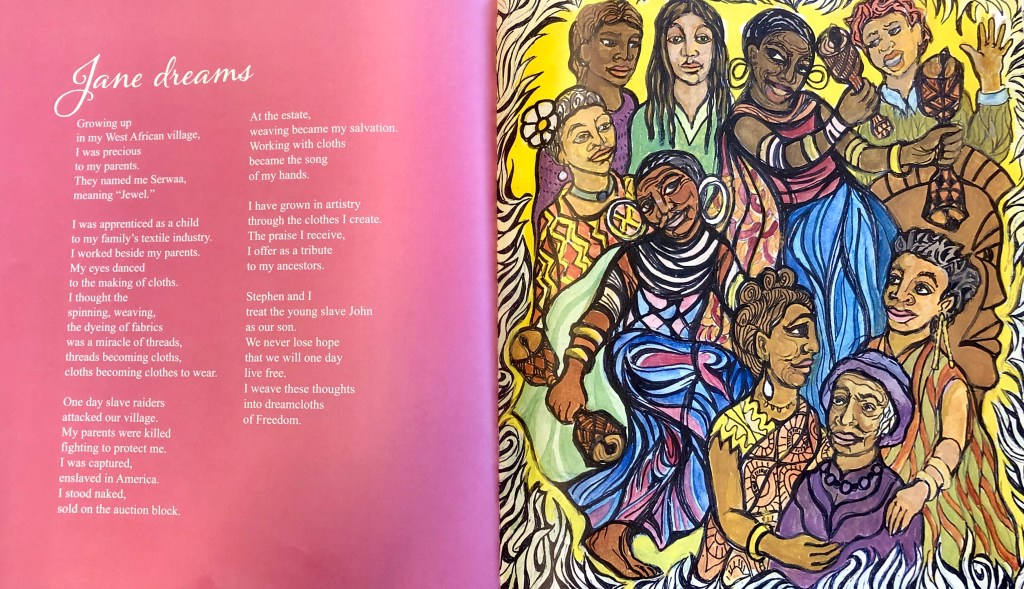
Each slave is given two spreads in the book: one that describes their “reality” (though made up by Bryan) and one that details the “dreams” they have. For example, one of the slaves from the appraisement, Jane (age 28, $300) was imagined by Bryan on the “reality” spread (p. 13-14) to have been the seamstress to Mrs. Fairchilds with beautiful skill with cloth. On the next page (p. 15-16), “Jane dreams” about her African name given to her by her parents, Serwaa, meaning “jewel”; she dreams about the salvation that weaving provides her, offering tribute to her ancestors of all praise for her work she receives; she dreams about marriage to Stephen, one of the other slaves on the estate.

Jane dreams, p. 15-16

The illustrations on each page are absolutely beautiful and give life to each person listed on the appraisement. Rendered in pen, ink, and watercolor, as well as collaged photo-reproductions of historical deeds, Byran’s the “reality” spread for each slave features a detailed illustration of the person laid over top of collaged documents with words such as “slave,” “offered for sale,” “to be sold,” or “Negroes”. The contrasting “dreams” spreads feature the same slave on the “reality” spread but in their happy place, their sanctuary, their salvation.

Freedom in Congo Square, by Carole Boston Weatherford and R. Gregory Christie (2016) uses a rhythmic prose to count down the days of the week until Sunday, when slaves were allowed to take off work, thanks to what was called the Code Noir (which made Sundays a holy day), and go to Congo Square. It briefly details the hard work and suffering that slaves had to deal with as they got through the week, as “a moment without work was rare” (p. 6). This book is based on the real-life Congo Square in New Orleans, Louisiana, where hundreds of slaves and free Blacks celebrated their African heritage and culture with traditional African music and dances, practiced African religious beliefs, spoke African languages, communicated concerns with others, and sold various items as vendors.

Still today, Congo Square celebrates African culture every Sunday with music and dancing. It is now a part of the Louis Armstrong Park and continues to sustain life and customs for many people there.

How can I apply lessons from these books to my own classroom?

These two books would fit perfectly in a curriculum unit about the effects of slavery, specifically to highlight the humanity slaves had—to think on their own, to survive, to dream. Freedom over me especially gives students the ability to look through a window into the life of a slave, and what that might have been like; it provides them with a new perspective, one that is almost never portrayed in literature unfortunately, one that shows slaves as having lives as human beings. Students should be encouraged to then open and step through the sliding glass door that opens them up to empathy.

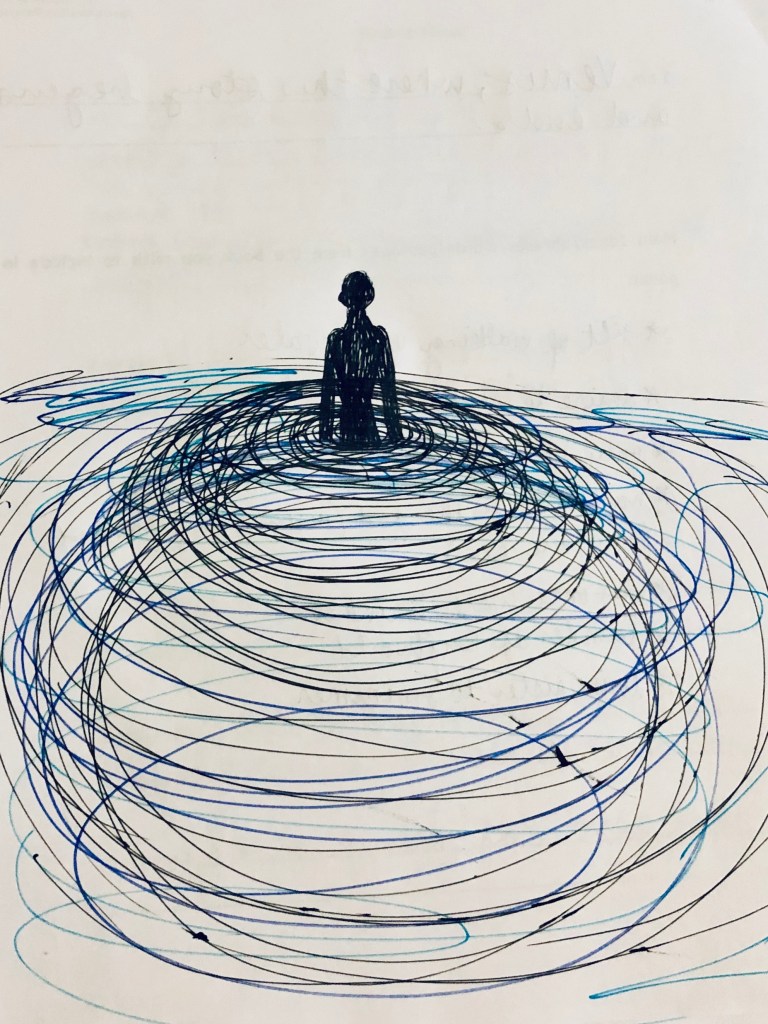
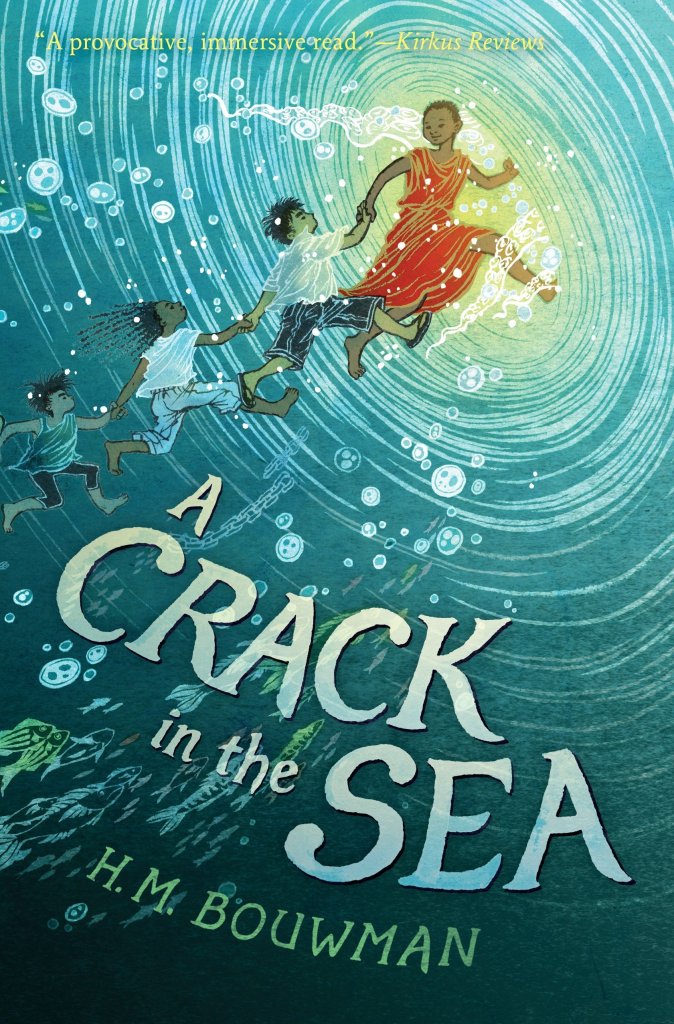
This could be taken a step further by teaching students about persona poetry and “I am” poems. Taking it back to one of the books from my last blog post, A Crack in the Sea by H.M. Bouwman could also be brought in for discussion on this slavery and freedom unit, as it puts a fictional spin on the real-life Zong slave ship that killed approximately 133 slaves by throwing them overboard. Below, read my example of an “I am” poem about Venus, one of the most pivotal characters in the book.

Venus in the maelstrom, by Grace Schmidt
I am Venus
by Grace Schmidt

I am Venus, once named Water Drinker, but took the name of the
god who rose from the sea fully formed.
I live in the second world, though I haven't always.
I wonder what the first world is like now—does it still enslave my
people?

I am the twin sister of Swimmer.
I hear my brother say, "keep your memories pushed down."
I dream of my parents, who were taken from me when the
slavers came.
I try to be strong.
I want to find my home.
I hope that I will, someday.

I am the founder of Raftworld.
I see the kraken, still looking for his wife—his home.
I question whether my people should return to Africa.
I feel it is too dangerous—we should remain in the second world
where it's safe.
I'm as strong as the god I am named for, but
I worry I did not lead my people the best way I could have.

I taste the sweet water of the second world and know I belong
here.
I say, "I trade myself willingly. I say goodbye to my beloved old
home, which I will never forget, and open my heart to my new."
I excel at walking underwater—the ocean feels like home.

I understand it is my time to go. I walk back to the ocean and
return home.
I believe everything will turn out all right in the end.
I was once taken as a slave, bound for the Caribbean to be sold as
property.
But now I am a leader for my people.
I am Venus, where this story begins and ends.

Students should be asked to compare the two spreads (“reality” and “dreams”) in Freedom over me given to each slave described, and explain how each contrasts to give different perspectives of who they might have been. Then, encourage students to write their own persona poetry to expand upon what Bryan has dreamed up for one of the slaves of their choice.

I highly recommend both Freedom over me and Freedom in Congo Square as wonderful additions to any classroom library.

References
Bouwman, H. M. (2017). A crack in the sea. New York, NY: Puffin Books.
Bryan, A. (2016). Freedom over me: Eleven slaves, their lives and dreams brought to life. New York, NY: Antheneum Books for Young Readers.
Frye, E. M., Hardin, B. L., Bouwman, H. M., & Stumb, A. E. (2018). Walking into the wardrobe and through the sliding glass door: Writing persona poems with A Crack in the Sea. Voices from the Middle26(2), 46-52.
Weatherford, C. B., & Christie, R. G. (2016). Freedom in Congo Square. New York, NY: Simon & Schuster.

Soñadores y Aventureros

We are dreamers, soñadores of the world.”

Dreamers, Yuyi Morales

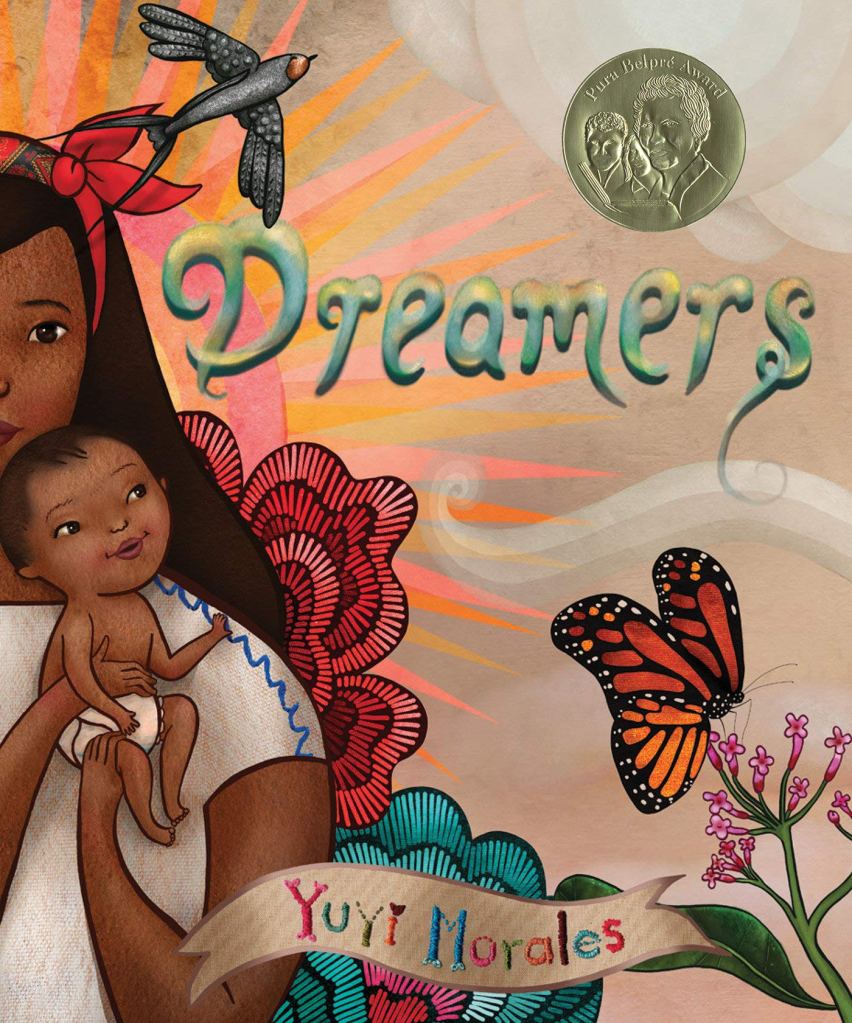
Dreamers (2018), written and illustrated by Yuyi Morales, is based on a true story from the author’s own life. Written in short but elegant prose, Dreamers details the story of a Mexican woman who, after having a child, packs keepsakes from home into a backpack and walks across a bridge, where on the other side she and her son become immigrants. At first this new place seems to be an unwelcoming new land, where the woman cannot speak the language and has a difficult time adjusting to her new home.

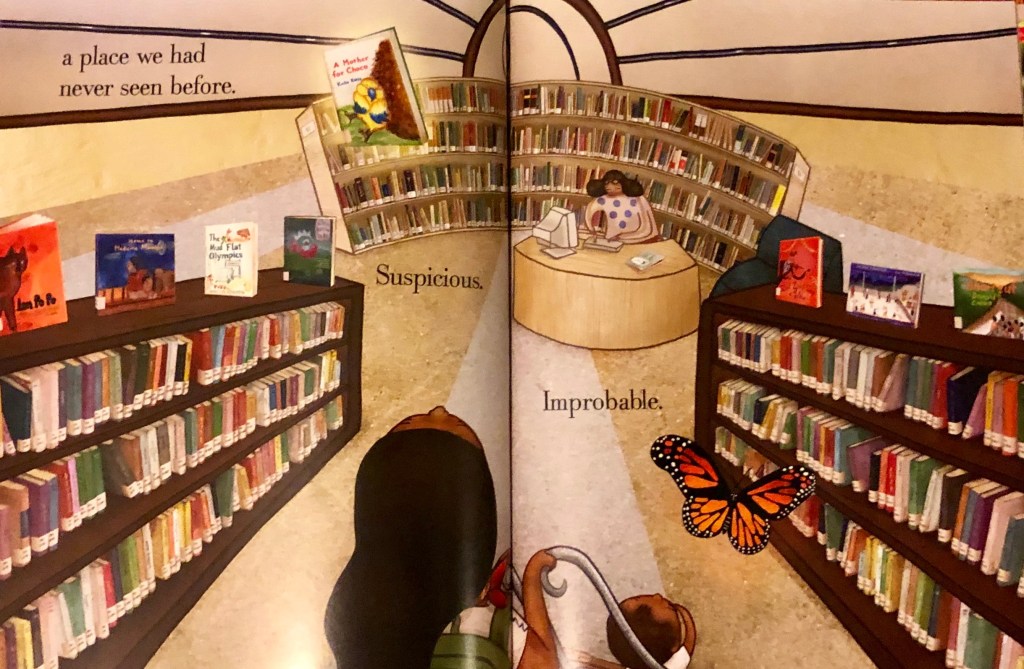
But one day, she and her son step into “a place [they] had never seen before”: a library. At first, this place seemed “suspicious. Improbable. Unbelievable. Surprising. Unimaginable” (p. 13-18); what kind of a place lets you take books without asking? But through this new world of books, specifically picture books, the woman and her son put trust into the books, and they learn “to read, to speak, to write, and make [their] voices heard” (p. 22-24). Eventually, this lends the woman and her son to create their own stories, and open them up to a world of possibilities and dreams, sueños. Each page, in complement with the words of poetry, is weaved together with compelling and gorgeous illustrations made by Morales using acrylics, ink, a fountain pen, and scanned images of things like Morales’ and her son Kelly’s childhood drawings and traditional Mexican fabrics. The imagery on each page holds layers of meaning and contributes significantly to this story of dreams.

H.M. Bouwman’s fantastical novel, A Crack in the Sea, written in 2017, tells the complex and magical tale through time of three sets of siblings, two different worlds, and one door to connect them all. The story begins by explaining that “it is sometimes the nature of books to tell things in what seems to be the wrong order,” (p. 1) and gives a brief introduction of some of the main characters: Venus, whose story has no beginning; Kinchen and her little brother Pip; Caesar; Thanh and Sang. Taking place in parts in the “first world” and others in the “second world,” the stories of the characters are interwoven in beautiful, magical ways imagined by Bouwman.

The novel begins with Kinchen, 12, and her little brother Pip, 11, in the second world on The Islands, in the summer of 1978. Pip, who possesses the special and rare gift of talking to underwater creatures, is taken by the Raft King to help his people (the Raftworlders) find their home again, using his gift. Kinchen becomes determined to rescue her brother, with the help of the ocean and a new friend Caesar, from the Raft King and the threat of the first world.

The next story takes us back to the beginning: Water Drinker (who becomes Venus, the founder of Raftworld) and her twin brother Swimmer are stolen from their home in Africa, on a ship headed toward the Caribbean to be sold as slaves in 1781. With their own water gifts, Venus and Swimmer save themselves and their people from enslavement, and find themselves in the second world.

Finally the story comes to Thanh and his sister Sang, siblings from the first world, who must escape the effects of post-war Vietnam in 1978. With the help of Uncle Hung and Mai, Thanh and Sang must keep themselves safe from pirate attacks and a storm. The siblings eventually find themselves brought together with Pip, Kinchen, Caesar, and the Raft King in the second world, thanks to the doorway that had also brought Venus and her people to safety. What happens next, you’ll have to find out on your own!

How can I apply lessons from these books to my own classroom?

What I especially enjoyed about both of these books is the how significant stories seemed to be in them. In Dreamers, stories are how the woman and her son learn about the new world they must navigate; they give them new language, hope, and resilience; they give them a voice of their own. In A Crack in the Sea, stories are important for their history: so important, in fact, that there is a role in Raftworld made specifically for storytelling. The storyteller, Jupiter, recounts tales of how Raftworld came to be; he chronicles the experiences of Venus, Raftworld’s founder; he depicts the magic that lives and has lived in the world for centuries.

Stories in both books provide us with answers, expose truths, connect us to others, provide hope, and give way for voices to be heard. When discussing Dreamers and A Crack in the Sea with students, this theme of storytelling can be an important one. Ask students what the importance of stories is—why they are needed and how they move a culture forward—and what stories are important to them and their lives.

Other themes in the two books that are important to address with students include immigration (willing and forced), slavery, and being a refugee. In Dreamers, the woman and her son are both immigrants to a new land:

“And when we made it / to the other side, / thirsty, in awe, / unable to go back, / we became immigrants.”

Dreamers, p. 6

Discuss with students what it means to be an immigrant—to be a newcomer in a land you are unfamiliar with, where you perhaps do not know the language or the customs—what would you do? How would you not only survive, but build a life in this new place? Discuss the importance of language and of stories for immigrants.

A Crack in the Sea tells stories of slaves and refugees: the story of Venus and her people, and how she saved them from chattel slavery; the story of Thanh and Sang, Vietnamese refugees escaping the after-effects of war in their homeland, and the dangerous journey they make in order to arrive to safety. Use these stories to get students to think critically about these themes, and ask them their thoughts on the experiences of the characters. Obviously, these topics should not be discovered through these books—make sure to prepare your students for discussions on slavery and forced migration ahead of time. Check out A Crack in the Sea: A Guide for Educators and Readers to find more teaching resources when reading this fantasy novel.

So, what are you waiting for? Like the dreamer you are, go to your local library and read Dreamers and A Crack in the Sea today!

References
Bouwman, H. M. (2017). A crack in the sea. New York, NY: Puffin Books.
Morales, Y. (2018). Dreamers. Neal Porter Books.

Witness for the Beautiful

“Sometimes when you’re surrounded by dirt, CJ, you’re a better witness for what’s beautiful.”

Last Stop on Market Street, Matt de la Peña

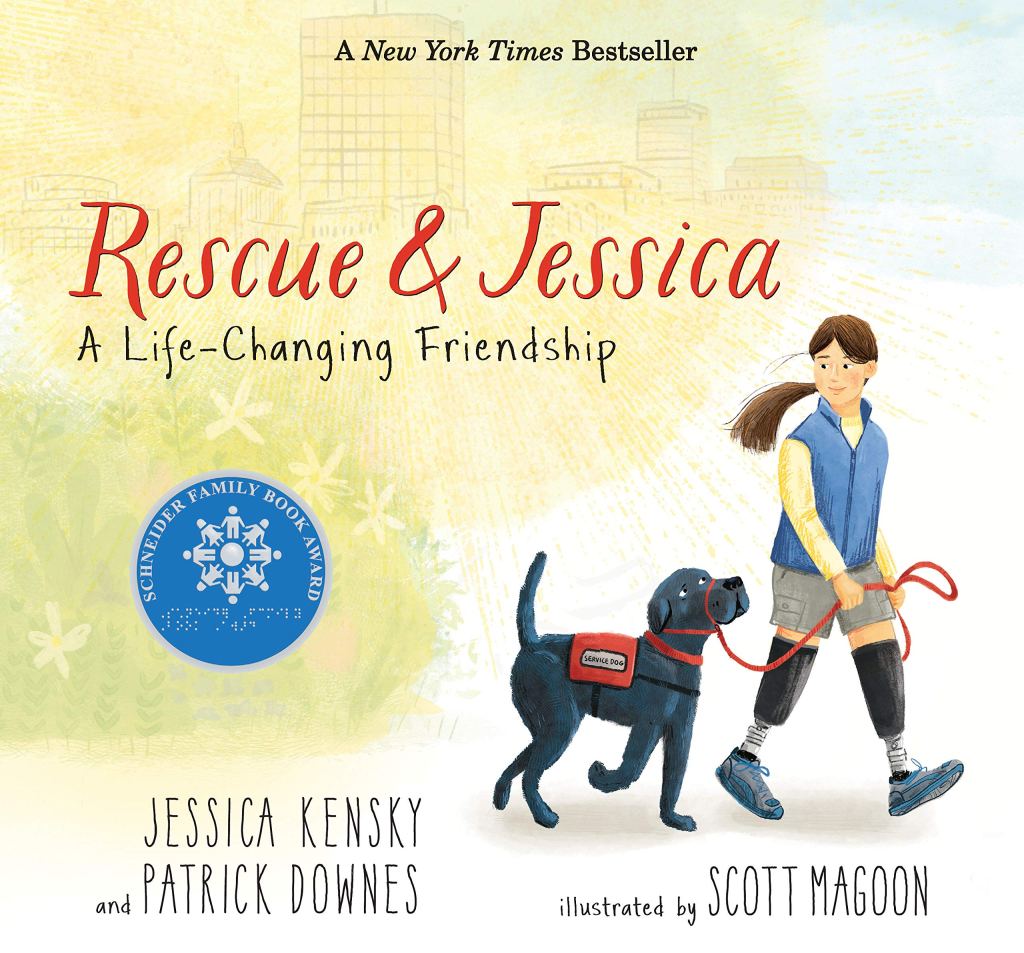
Rescue & Jessica: A Life-Changing Friendship is based on the true story of how Jessica met her service dog, Rescue, after she lost both her legs in the aftermath of the 2013 Boston Marathon bombing. Written in 2018 by the real-life titular character, Jessica Kensky, and her husband Patrick Downes, Rescue & Jessica won the 2019 Schneider Family Book Award for its excellence of portrayal of the disability experience in literature for youth. The picture book was also illustrated by another of the bombing survivors, Scott Magoon. This story is one of overcoming the odds and how disability can bring a positive light to one’s life.

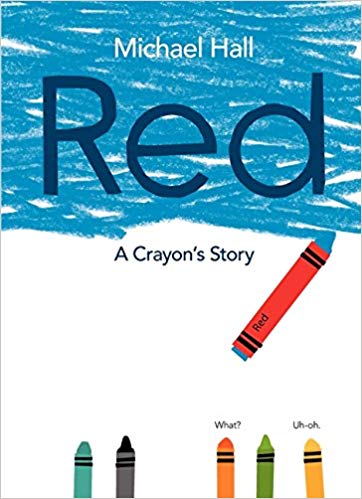
Michael Hall’s Red: A Crayon’s Story tells the tale of a young crayon, Red, who just cannot seem to do what he’s supposed to: color red. Everything he draws ends up blue! Written and illustrated by Hall in 2015, Red‘s hero has a factory-made label that makes everyone in his life (including Red) think that he just can’t draw anything right. That is, until a new friend asks Red to color something for them, and Red finds his true strength of coloring all things blue.

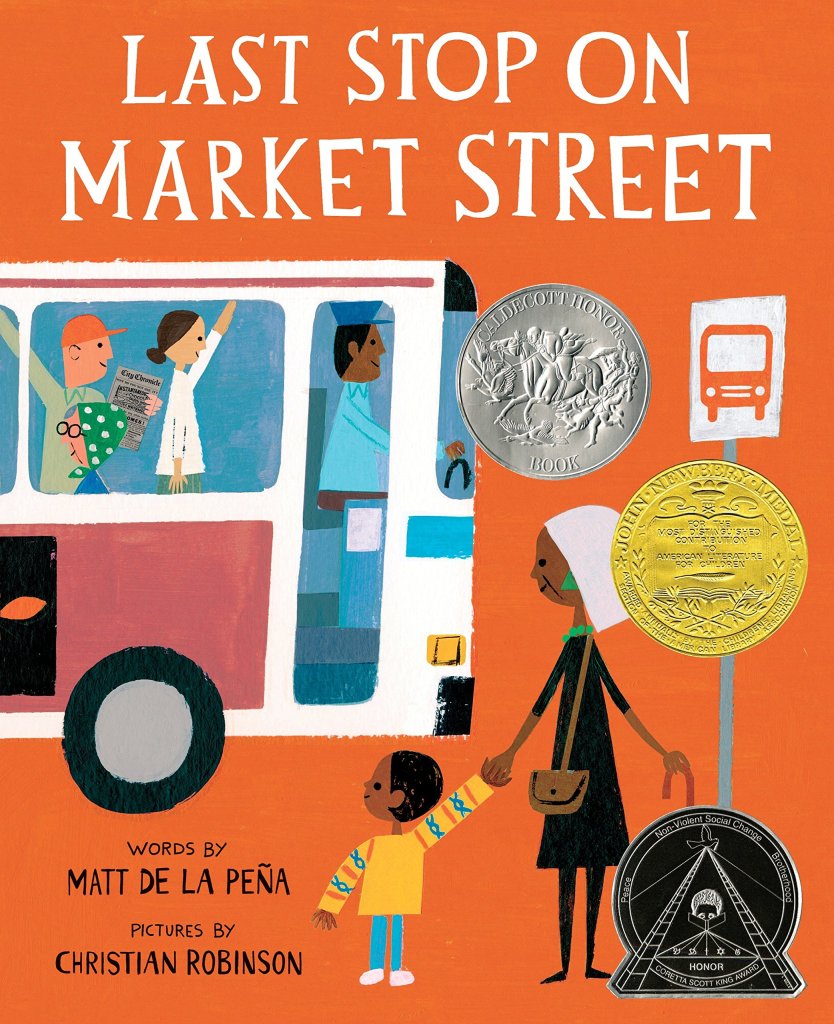
The picture book Last Stop on Market Street was written in 2015 by Matt de la Peña and illustrated by Christian Robinson. In 2016, it was awarded the John Newbery Medal, as well as the Coretta Scott King Illustrator Honor Award and the Caldecott Honor Medal. After church one day, CJ and his Nana are waiting for the bus in the rain, and CJ begins complaining about things: why they don’t have a car, why he has to go somewhere after church and his friends don’t, why he doesn’t have a music player to listen to. And at every complaint, Nana has a positive spin for it. On their trip, CJ begins to see the beauty in their weekly tradition: meeting new people, doing good deeds, experiencing beautiful music. At the end of the book, CJ and his nana arrive at a soup kitchen that they volunteer at every week. By the time they get there, CJ has stopped complaining and ends up being glad they came.

What was neat about reading these three books was that all three were written/illustrated in #OwnVoices: they are books about diverse characters written or illustrated by authors from that same diverse group. Rescue & Jessica is quite literally written in own voice, as Jessica Kensky wrote the book about her own experiences with overcoming a disability. Red—which is reminiscent of so many stories of students in schools who are labeled with intellectual disabilities, learning disabilities, or developmental disorders—was written by Michael Hall, who was diagnosed with dyslexia as a child. The illustrations in Last Stop on Market Street features a little black boy and his Nana, were created in paint and collage by Christian Robinson, who is also black. Each of these books draws from the personal experiences of the diverse authors and illustrators represented in them. Because these are written in #OwnVoices, students can recognize themselves through the characters in these books, or engage with books that provide them a look into the experiences of people they don’t personally relate to.

How can I apply lessons from these books to my own classroom?

Red helps students examine what it is like to have a label forced upon someone, and how labels can give us expectations about ourselves or others. In the end, though, sometimes all that we need is a new perspective to see our strengths. Red reminds us that sometimes all we need is someone who finds our strengths and believes in us for us to succeed! Michael Hall says that while he began writing Red, he “began to hear voices from [his] past. [He] knew that, at some level, this was [his] story” (Hall, n.d.), as Hall is dyslexic. Red, like Hall as a child, “accepted the label he was given and suffered profoundly” (Hall, n.d.), because no one, no matter how supportive, could see beyond the label.

Interestingly, Red not only refers to disability labels, but also alludes to labels for gender identity as well. Red even won an award in 2016 on the Rainbow Project Book List, a list of recommended books for children through age 18 that deal with LGBTQ+ issues and situations. Excerpts such as the one on page 9, “His mother thought he needed to mix with other colors,” and on page 35, “He was red blue,” possibly (perhaps unintentionally) allude to the analogy of color:gender identity. Regardless of what the label Red is given makes the reader think about, Red opens up the discussion for students about seeing beyond a label. In this way, Red will provoke classroom discussions about issues including dis/abilities, prejudice, the reminder that all of us have both strengths and weaknesses, and the importance of being true to oneself.

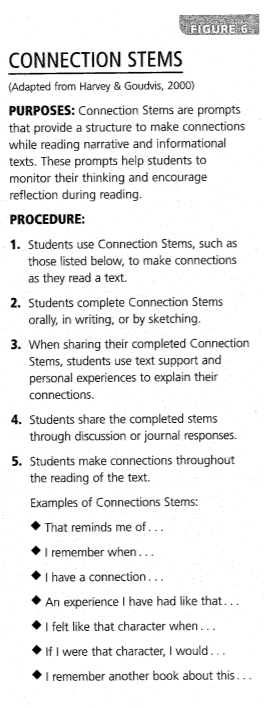
While reading Rescue & Jessica, it may be useful for students to use the following Connection Stems (McLaughlin & DeVoogd, 2004) critical literacy strategy to make connections, monitor thinking, and encourage reflection during reading.

Students will likely have several connections to the picture book: perhaps they had a family member running in the Boston Marathon when the bombing occurred, maybe they or someone they know has a prosthetic leg(s), or possibly they or someone they know uses a service dog to do things. After students make their Connection Stems, they will share the connections they made through discussion or journal responses. This can lead into a critical thinking discussion about what it means to have a disability, visible and invisible struggles that come with having a disability, and what it means to be part of a supportive community. Check out the great Teacher’s Guide and Activity Guide to find more ideas about incorporating Rescue & Jessica into your classroom!

Like with Rescue & Jessica, Last Stop on Market Street would be a good book for students to work on their connection-making skills, as many students might relate to CJ and Nana’s journey. It could also lend itself to a discussion on poverty and hunger (Bishop, 2016), specifically looking first at what a soup kitchen is, who might work at or run a soup kitchen, or who might go to a soup kitchen; this might encourage students to do some social activism, perhaps wanting to volunteer somewhere on their own, or maybe inspire a class field trip to a soup kitchen to volunteer for a day. Last Stop on Market Street “can also be a starting point for examining one’s worldview and the way we respond to people whose circumstances are less fortunate than our own, as well as an incentive to try to make a difference by engaging in social action” (Bishop, 2016). Students might also be encouraged to think about the positive messages Nana tells CJ on their journey (i.e., “Sometimes when you are surrounded by dirt, CJ, you’re a better witness for what’s beautiful”) and what they mean for their own lives (Bishop, 2016).

Rescue & Jessica: A Life Changing Friendship, Red: A Crayon’s Story, and Last Stop on Market Street provide students with a critical lens that looks into dis/abilities, gender identity, social justice actions, and seeing the beauty in the everyday. I highly recommend all three of these #OwnVoices books for your classroom!

References

Bishop, R. S. (2016). A ride with Nana and CJ: Engagement, appreciation, and social action. Language Arts94(2), 120-123.
De la Peña, M. (2015). Last stop on market street. New York, NY: Penguin Random House Company.
Hall, M. (2015). Red: A crayon's story. New York, NY: Greenwillow Books.
Hall, M. (n.d.). Author's statement: Red: A crayon's story. Retrieved from https://www.michaelhallstudio.com/pages/books/crayon/authors-statement.html
Kensky, J., & Downes, P. (2018). Rescue and Jessica: A life-changing friendship. Somerville, MA: Candlewick Press.
McLaughlin, M., & DeVoogd, G. L. (2004). Chapter 2: Teaching critical literacy. In Critical literacy: Enhancing students' comprehension of text (pp. 34-58).

Welcoming Immigrants as Friends

“‘I wish,’ she whispered, ‘for someone to love with all my heart.’

That was my first wish. And the beginning of many more.”

Wishtree, Katherine Applegate

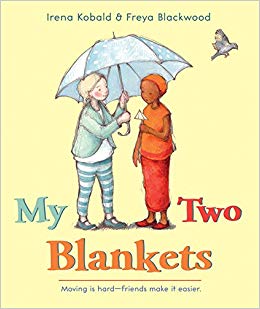
My Two Blankets, a 2014 picture book by Irena Kobald and Freya Blackwood, is about a young girl nicknamed Cartwheel by her auntie. Kobald draws on her experiences as a multilingual Austrian immigrant to Australia and her teaching of aboriginal children in Australian outback communities to write her first published picture book. She also found inspiration in a friendship that developed between her daughter and a Sudanese child. Cartwheel, a free and fun-loving spirit in her homeland, becomes sad and lonely when war comes to her country, forcing her and her auntie to move to a strange new country. Written in first-person, Cartwheel describes her loneliness as being “like standing under a waterfall of strange sounds. The waterfall was cold. It made me feel alone. I felt like I wasn’t me anymore” (p. 6).

To protect herself from her loneliness, Cartwheel wraps herself in a metaphorical blanket, made up of her “own words and sounds” (p. 8). That is, until a kind young girl waves to Cartwheel in the park. At first, when the girl spoke to Cartwheel, her words were like being back under the waterfall; but as the two girls became better friends and the girl taught Cartwheel new words from her language, and Cartwheel begins to weave a new blanket. Her new blanket, another metaphor for this new language, grew and grew, and eventually became “just as warm and soft and comfortable as my old blanket” (p. 27).

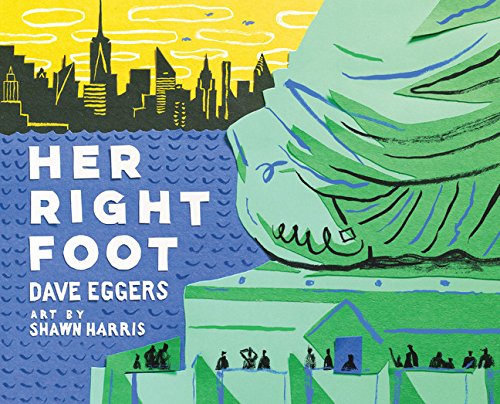
Her Right Foot, written in 2017 by Dave Eggers and illustrated by Shawn Harris, is a picture book about the right foot of the Statue of Liberty. The first half of the book delves into the history behind the building and transportation of Lady Liberty, the sculpture designed in France by Frédéric Auguste Bartholdi that now stands tall in New York City. Why her right foot, you ask? Because, the Statue of Liberty is “going somewhere! She is on the move!” (p. 51). That’s right, Lady Liberty is on a mission, with her right foot—her entire right leg—in mid-stride. But where is she going? Eggers says that she is “not content to wait” (p. 89) for the immigrants, “the poor, the tired, and yearning to be free” (p. 88), and “She must meet them in the sea” (p. 91).

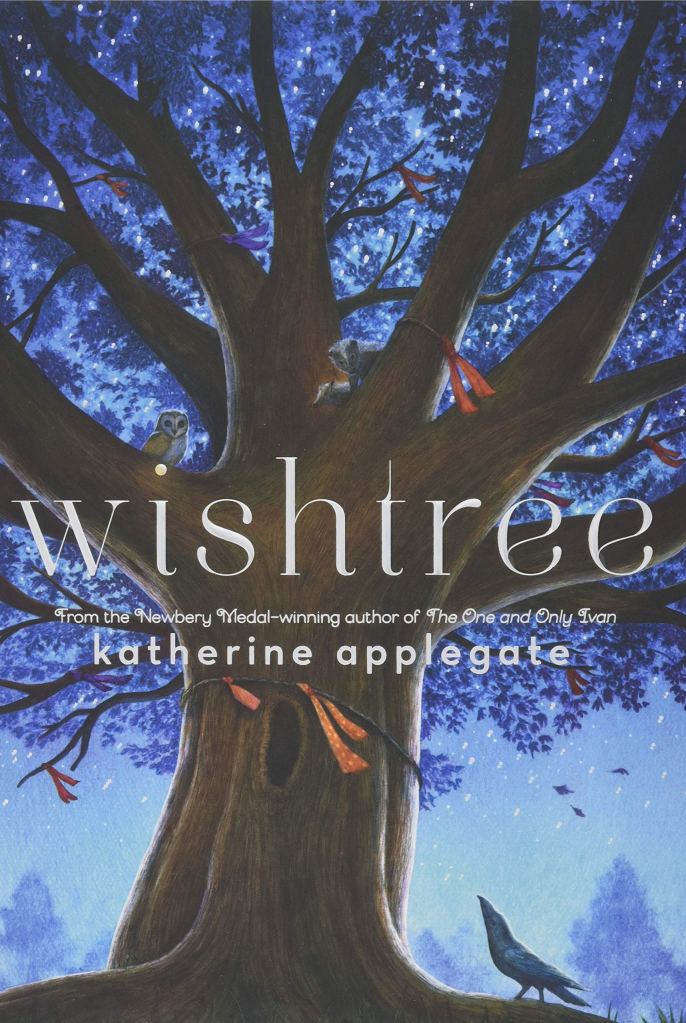
Wishtree, a 2017 novel by Newbery Medal-winning author Katherine Applegate, features a 216-year-old northern red oak tree named Red as the unexpected first-person narrator. Over the centuries Red has been alive, she has become what is known as a “wishtree,” an Irish tradition where people come on the first of May every year to tie scraps of paper, bits of fabric, and more, each representing a wish. Besides being a wishtree, Red is also a home to many animals in the neighborhood. Red, as the protector of the neighborhood, has seen everything.

That is, until a new family rents the tiny blue house that sits below Red’s shade. Red and the animals she shelters come to be very caring over the family’s little girl, Samar. After the nasty word “LEAVE” is carved into Red’s side, threatening Samar and her immigrant family, Red decides that she will protect Samar and grant her wish for a friend—even if that means breaking the rules a bit.

All three of these books details different immigrant experiences: in My Two Blankets, the narrator is the newcomer that must attempt to find her place in her new home; in Her Right Foot, it is the Statue of Liberty who moves toward immigrants and welcomes them to her country; in Wishtree, Red helps a Muslim immigrant make a new friend.

How can I apply lessons from these books to my own classroom?

Each of these books features a unique and positive perspective of the immigrant experience. We can use all three in a text set to give readers ready-made perspectives on the topic. Then in a discussion about immigration, we can juxtapose student thinking with those in the three books, as well as compare and contrast the thinking of each of the authors. Ask students what Dave Eggers wrote that helped them think differently about what Katherine Applegate wrote, or about what Applegate wrote that made them think differently about what Irena Kobald wrote.

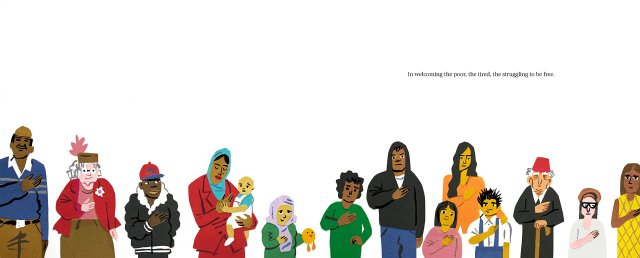
It is important for students to note that although there are often similarities between the experiences of immigrants, not every migrant’s move will look the same. Emigrants move to new places all over the world (not just the United States) to escape war, famine, or danger, as we see in My Two Blankets. Migrants come from all over the world, too, which students can learn from reading Her Right Foot, particularly by looking at the spread below, which highlights just how different the immigrants that arrive in America can be:

“In welcoming the poor, the tired, the yearning to be free.”

In the illustrative spread above, the emphasis is placed upon the people featured—the immigrants—that have come to the United States, while the text—though important—almost takes a backseat to the image. Each person has their right hand placed over their heart, symbolizing the significance and value each person sees in their migration to the U.S., regardless of what they look like, what age they are, and how they dress.

Shawn Harris, the illustrator of Her Right Foot, used construction paper and India ink to render the beautiful illustrations featured throughout the book. The gorgeous way that Harris uses his materials would never lead one to believe he simply used construction paper and India ink, as each page is a colorful and engaging representation of Eggers’ words, come to life. The way he uses color is also intriguing; for example, on the end pages and several other pages in the book, Harris will start on the left with brown, then end with blueish-green on the right (in the same way the Statue of Liberty’s copper skin transitioned from brown to green). The illustrations in Her Right Foot that Harris creates are, in my opinion, some of the most beautiful artworks in a children’s book I’ve seen.

If you are interested in looking more into how you can incorporate Her Right Foot and Wishtree into classroom discussions and lessons, check out the classroom guides and resources linked here and here.

So, are you looking for some awesome children’s books to critically discuss the immigrant experience with young students? Look no further than Wishtree, My Two Blankets, and Her Right Foot!

References

Applegate, K. (2017). Wishtree. NY: Feiwel and Friends.
Callow, J. (2017). “Nobody spoke like I did”: Picture books, critical literacy, and global contexts. The Reading Teacher71(2), 231-237. doi:10.1002/trtr.1626
Edwards, A. (n.d.). WOW stories: Connections from the classroom: Re-visioning the world through multiple perspectives. Retrieved from https://wowlit.org/on-line-publications/stories/storiesi2/15/
Eggers, D. (2017). Her right foot. San Francisco, CA: Chronicle Books.
Kobald, I. (2014). My two blankets. New York, NY: Houghton Mifflin Harcourt Publishing Company.

Evaluating Children’s Literature

Guidelines for Evaluating Children’s Literature: Questions to Consider

  • How did the author make the book believable? In other words, how true is the emotional reality of the story…
  • Discuss one of the main characters. How did the author make this character unique and believable? What issues does this character grapple with? How does the character evolve across the book? How were you able to relate to the characters? (You may wish to discuss the main character’s relationship to other characters)
  • Discuss the setting. Was the setting essential to the plot of the book? Explain why or why not. Does it add depth to the book?
  • What did you learn about the time period in which the book was set? Do you think the time period was described accurately? How do you know?
  • What elements of the author’s style and language drew you into the book? Explain and give examples. Examine the poetic or literary devices used in the text (i.e. simile, metaphor, flashback, onomatopoeia, imagery, alliteration, personification, symbolism). What does the author draw upon to write this story? Are there patterns, repeated phrases, predictable structures?
  • What factual information did you learn? Did anything surprise you? How do you know if this information is accurate?
  • What does the book remind you of from your own life?
  • What special meaning or message does the book convey to you? Do you think this is a worthwhile theme for elementary/middle-level students? Explain.
  • How does the point of view affect your reading? Who is the implied reader or intended audience of the book? Whose background knowledge is privileged in reading this text?
  • How does this story relate to the world as you see it?
  • Are any characters privileged or marginalized? How are the lived experiences of historically minoritized populations represented in the text?
  • What moral values and social-political messages (race, gender, religion, class, poverty, environment, immigration, education, homelessness, etc.) are dominant in the text? Does the author foster social consciousness?
  • In this text, who had the power to make choices for a better world?
  • Does the author present cultural details and markers authentically and multidimensionally? Are these cultural details integrated naturally?
  • Is the author/illustrator a cultural or #OwnVoices insider (e.g., Do they self-identify as a member of the community portrayed in the book?)? Has the book been endorsed by a reputable organization and/or insider with expertise?
  • Does the author use details accurately and does this work avoid stereotypes? Does the author use language authentically?
  • What experiences did the author bring that would help them represent the culture or social/environmental issue fairly?
  • How does the author build tension in the book? How does the mood of the book contribute to the tension?
  • What classroom connections/activities naturally link to this book. Discuss a specific resource, strategy, activity you would incorporate into your classroom.
  • What reading/writing mini-lesson could be taught through this book or passages from the book?

Guidelines for Evaluating Picture Books: Questions to Consider…

Artistic Technique/Media: What artistic media or combination of media was used? How do the illustrations support the text and the meaning of the story? Does the illustrator’s artistic medium enhance the fit between text and pictures for this book? Is the art accessible and interesting to the intended audience? Consider the elements of design (line, color, space, shape, texture, perspective) incorporated in the artwork. Does the book incorporate a horizontal or vertical layout or both, and is this important? What about font choices?

Interplay of Textual and Visual Images: Analyze the relationships between the text and the illustrations. Does the text alone hold the reader’s attention? What kind of gaps does the author/illustrator leave for the reader to fill in? Are details purposefully left out to create tension? How does the story flow from page to page? Are there borders that separate objects, cross over in language and image from page to page, or tell a story within the borders? Are there any stories within the main story? Are there parallel texts or ideas being presented?

Themes: Throughout the book, the author may develop a theme. Does the author have an issue that they keep raising? A point, motif, or idea that recurs throughout the book? These are the author’s themes – arguments or life lessons that the author particularly wants to emphasize.

Examine the Experience of the Author and Illustrator: Does the author/illustrator have experience with the culture or population that they are representing? Is the author/illustrator a cultural or #OwnVoices insider (e.g., Do they self-identify as a member of the community portrayed in the book?)?

Developing Agency

“‘You have also taught me to be wild,’ said the robot. ‘So let us all celebrate life and wildness, together!'”

The Wild Robot, Peter Brown

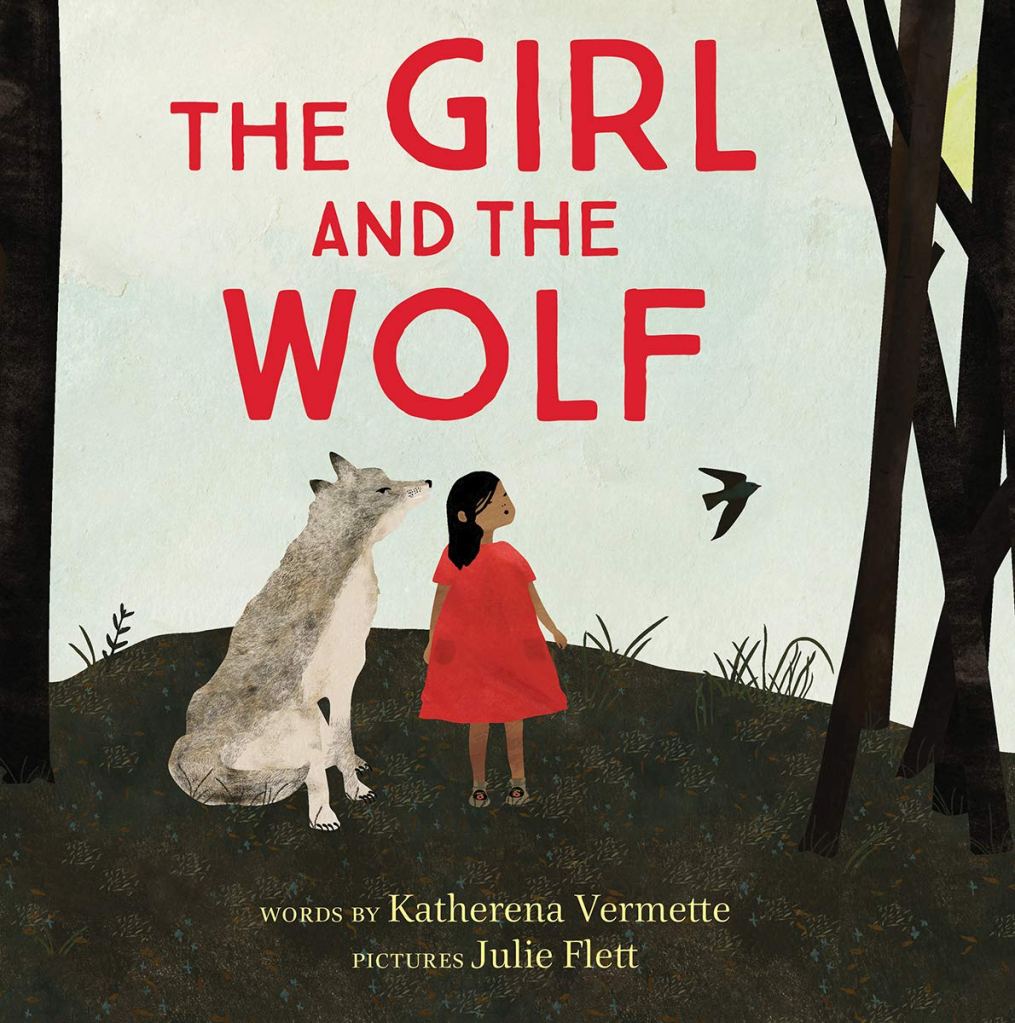
The Girl and the Wolf, a short story written by Katherena Vermette and illustrated by Julie Flett, seems to take a twist on the classically known story of Little Red Riding Hood. The story features an Indigenous girl who gets lost in the woods while out with her mother. In the woods, she meets a wolf; but instead of the wolf following her to granny’s house and eating the girl, the wolf helps guide the girl back to her mother. He reminds her of her own abilities to survive and find her way back home to her mother.

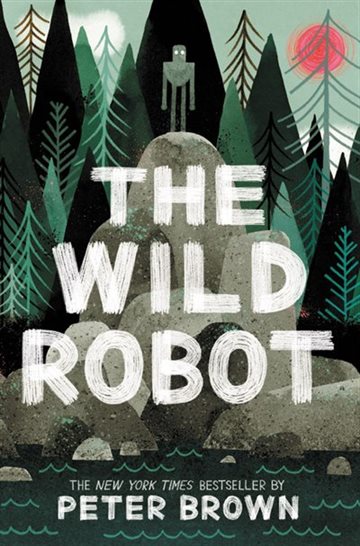
Similar in theme, The Wild Robot, a novel written and illustrated by Peter Brown, is about a robot named ROZZUM unit 7134 (but you may call her Roz), who ends up on an island after a hurricane crashes her ship. The robot must adapt to her unfamiliar surroundings and learn from the animals inhabiting the island in order to survive. At first, this is difficult for Roz, who appears to be a shiny and scary monster to the animals on the island, who greet her with hostility and fear. Over time, though, Roz begins to pick up a thing or two that will help her survive, and she begins to make friends with the locals.

What I enjoyed about both of these books is that they are both relatable to a large audience of readers. Though Vermette and Brown’s books are fictitious and a bit fantastical (as we all know wolves don’t talk and robots don’t just randomly end up stranded on islands in real life), the feelings they depict in their books—of feeling lost, survival, building trust—are all universal experiences we can all relate to on an emotional level.

Brown does an exceptional job of this in his novel, which delves deeper into the experiences many minority communities often face: fear of exclusion, being viewed by others as a “monster” for being different, learning a new language, and the uncertainty of how to make friends in a new culture.

“Roz wandered the island, covered in dirt and green growing things, and everywhere she went, she heard unfriendly words. The words would have made most creatures quite sad, but as you know, robots don’t feel emotions, and in these moments that was probably for the best.”

The Wild Robot, p. 53

All the animals were scared of Roz in the beginning, calling her a monster, simply because she was new and different and at first didn’t know the language of the animals. This is not unlike the treatment of immigrants from the Latinx community (or people who simply look like immigrants) in the United States right now. Fear of the unknown is a common theme worldwide and though not explicitly stated, Brown does an excellent job of alluding to this fear throughout his novel.

Another theme that arose in The Wild Robot was that of motherhood—or even parenthood in general. Roz saves and adopts a gosling she names Brightbill, whose family was killed in an accident on the island, and struggles with the new responsibility of parenting—an unusual thing for a robot to do. She seeks help from one of the older geese on the island, Loudwing, to help the little gosling survive. Loudwing tells Roz that she must now act as the gosling’s mother, and gives her many helpful rules for being a mother:

“‘Yes, I do want him to survive,’ said the robot. ‘But I do not know how to act like a mother.’

‘Oh, it’s nothing, you just have to provide the gosling with food and water and shelter, make him feel loved but don’t pamper him too much, keep him away from danger, and make sure he learned to walk and talk and swim and fly and get along with others and look after himself. And that’s really all there is to motherhood!'”

The Wild Robot, p. 75

I had to laugh after reading this paragraph, especially at that last sentence, “And that’s really all there is to motherhood!” To sum up motherhood in such a neat little box seems to not capture it fully; but at the same time reading this section details just how much that mothers really do for their children! I also appreciated that in this listing of motherly qualifications, the goose did not mention the need to give birth to be a mother; this is often a quality that is brought up a lot in the defining of what it is to be a mother, but it is not a true qualifier like the other things listed by Loudwing. The discussion between Roz and her son Brightbill on page 125 summarizes this struggle many families with adopted children often experience at some point or another:

Parents. The word suddenly left Brightbill feeling uneasy. ‘You’re not my real mother, are you?’

‘There are many kinds of mothers,’ said the robot. ‘Some mothers spend their whole lives caring for their young. Some lay eggs and immediately abandon them. Some care for the offspring of other mothers. I have tried to act like your mother, but no, I am not your birth mother.'”

The Wild Robot

Being adopted can sometimes feel to the child like betrayal, abandonment, and unbelonging; in reality, though, it is the opposite. Being adopted is and should be a celebration of the wanting of a child by adoptive parents, and the love in adopted families is often stronger than some families based on blood relation. Reading this—especially knowing that this conversation between Roz and Brightbill was in response to Brightbill being teased for who is mother was—made me consider the reality of this teasing that is often experienced by both parents and children of LGBTQ+ families alike. This is another group that is oppressed for being different or out of the “norm” that society has built, and is sadly often one that is labeled as monstrous.

“‘Stay away from my mama!’ Brightbill swopped down and skidded to a stop between the robot and the bears.

‘So the rumors are true!’ Nettle laughed. ‘There really is a runty gosling who thinks the robot is his mother! How could anyone be so stupid! Do yourself a favor, gosling, and fly away before you get hurt!'”

The Wild Robot, p. 140-141

This harsh jab by a young bear toward Brightbill is a direct reflection, in my eyes, of the cruelty too often received by members of the LGBTQ+ community and their children: the insinuation that these families are not “real” families because they do not line up with the nuclear family expected by society. The young bears learn their lesson later, however, when Roz saves one of them and get a talking to from Mother Bear. It is important to remember that this does not always happen in real life, as children’s perspectives on matters like these generally originate from the views of their parents.

In both books, it is the characters that, in the real world, are often put down and frowned upon—a brown-skinned girl and a “monster”—that develop their own agency the most fully. In The Girl and the Wolf, the wolf helps the girl to acquire this agency; when he finds her lost in the woods, rather than taking advantage of her situation or telling her exactly how to get back, the wolf simply asks her, “What are you going to do?” Each time, the girl responds by saying she doesn’t know, but the wolf reminds her, “Yes you do,” and refers her to use her own senses to get her back home.

In The Wild Robot, Roz develops agency out of necessity for survival. As she adapts more and more to her environment and becomes more “wild,” the robot begins to have influence with her friends, who look up to her. She uses this agency to take action to help her community: building homes and fires to keep the animals of the island warm during a terrible winter, throwing a celebration for the island, and in the end, doing what she knows is best for herself and those she loves.

What makes for a good book?

Prior to reading these books, I wrote down a few characteristics that I believed to qualify a good book. This is what I wrote:

I would say a good children’s book is colorful, whether through pictures or words, and instills vivid imagery in the mind of the reader. It would have a moral or learning experience for the child which helps them remember the book and incorporate the lesson in their own lives. It is generally “cute” and a display of loving others. Good children’s books are loved by children and adults alike because of its good storytelling. Finally, they are also inclusive of people who are unique or different from us (or show value placed on people not generally seen in mainstream literature); this inclusion may also be featured through the author or illustrator.

Both The Girl and the Wolf and The Wild Robot reflect these criteria I have come up with. The Girl and the Wolf‘s illustrator Julie Flett uses collage to create colorful and visually-stimulating pictures on each page. The detailed descriptions in The Wild Robot create vivid images in the mind of the reader, not to mention the sweet illustrations throughout the novel. The Girl and the Wolf and The Wild Robot alike have multiple learning experiences, both discussed in detail throughout this post and in the section below; inclusivity are large themes in both books as well. Both these books are also beloved by children and adults alike.

How can I apply lessons from these books to my own classroom?

Something that is always needed in classrooms across the country: more children’s books that show students their own agency and power to change their destiny, especially through the lives of girls. Often these books that inspire “girl power” are bright, colorful, and feature girls doing remarkable things. I like that The Girl and the Wolf is one of these “girl power” books without the sparkle and flash of most of the other books in this category; the girl doesn’t break any societal barriers, but her experience is instead far more relatable to the everyday reader. In a stressful situation, she takes in her surroundings, takes advice from others, and gets herself out of trouble all on her own. This book also serves as an example of children’s literature featuring a girl from an Indigenous peoples group that is not all about traditional celebrations or practices of Indigenous communities. While it is good these books exist, it is also important to show other realms of life for Indigenous peoples as well, to show a more holistic viewpoint and steer away from stereotypes and single stories.

Because The Wild Robot is a longer read than The Girl and the Wolf, there are many more themes that can be addressed with children in your classroom as you read. It functions as a pathway to many critical discussions about topics such as inclusivity, diverse families, making a positive impact on your community, and even climate change (see section where the island inhabitants discuss the ever-hotter summers and the ever-colder winters, p. 191-192). All of the conversations that arise while reading The Wild Robot are important to have in your classroom; ask students how they think what they are reading relates to the world around them, to be empathetic toward characters in the story, and to think critically about each of these themes discussed in this post.

So what are you waiting for? Go read The Girl and the Wolf and The Wild Robot now!

References

Brown, P. (2016). The wild robot. New York ; Boston, NY: Little, Brown and Company.
Sharp, C. (2018, May/June). Readers can do anything: Our children's literature day lunch keynote on the transformative impact of a good book. Literacy Today35(6), 40-41. Retrieved from http://literacyworldwide.org
Short, K. G. (2012). Story as world making. Language Arts90(1), 9-17.
Vermette, K. (2019). The girl and the wolf. Canada: Theytus Books. References

Hello!

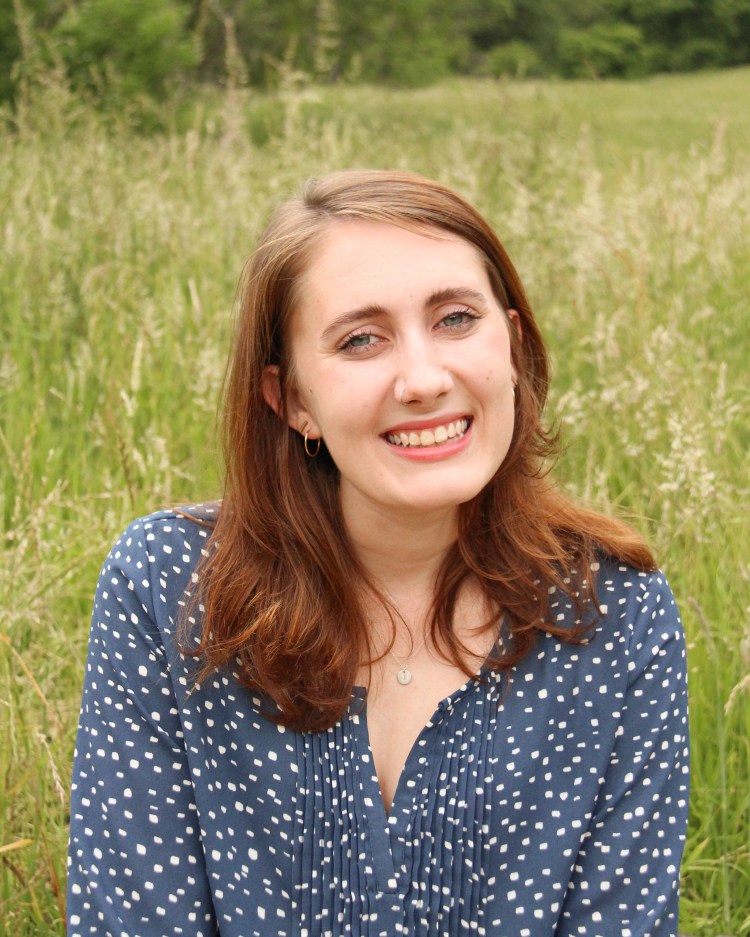
Hi there! My name is Grace Katharine Schmidt. I am an alumna of Appalachian State University in Boone, NC, where I received both my M.A. in Reading Education through the Accelerated Admissions (4+1) program in May 2020 and my B.S. in Elementary Education in May 2019. Additionally, I have my N.C. Professional Educator’s Initial License for Elementary Education (K-6). I look forward to starting my first year of teaching this 2020-2021 year!

What I Like

In my free time, I enjoy reading, cooking, baking, hiking, and watching movies. Much of my personal library is comprised of children’s literature. Some of my favorite children’s book authors include (but are by no means limited to!) Mo Willems, Lois Lowry, Judy Blume, and Peter Brown (to name a few)! Other things I like include: my brothers, my friends, animals, coffee, tea, running, traveling, and eating.

What I Dislike

I dislike loose hairs that stick to people’s shirts, rush hour traffic, and mushrooms. I dislike when people are rude, self-absorbed, and/or bigoted. I dislike inequality and inequity of resources. I dislike possums (even though I know they are important for our environments). I dislike when things are unbalanced or uneven.

How I Look

I am 5 foot, 6 and one-quarter inches tall. I have green eyes (but they used to be blue as a kid). I am pale as a ghost during the winter and can turn red as a lobster during the summer (SPF is a lifesaver!).

Throughout my life I have had different hair colors—I was born with black hair, then it fell out and turned light brown, then in middle school I began experimenting with dying my hair: crimson, “natural red,” purple, dark brown… for much of high school I kept it dark brown, then when I started college I let it fade back to its more natural light brown for a few years. Last year I got bored of it again and bleached it so I was blonde. Now I am trying out dark brown again… who knows what I’ll do with it next!

I have been declared as “fashionable” by the 4th graders I student taught, and I try to hold myself to their standard. I am proud of my strong body and all it does for me everyday: walk, run, hike, and so much more.

How I Act

I am hardworking: when I do something I care about, I put my whole self into doing it.

I am reliable: I can be trusted and when I say I’ll do something, I’ll do it.

I am loyal: if I am your friend, I will support you for a lifetime.

I am meticulous: I like for things to be done well, and often put extra work into making something perfect.

I can be funny: I like to laugh and I like to make other people laugh.

I am an intersectional feminist: I think everyone should be treated equally, regardless of gender identity, sexual orientation, race, religion, ability, etc.

I am compassionate and empathetic: I always try my best to be kind to others and understand and share the feelings of others.

What You Should Know About Me…

  • I was born in Orlando, FL but spent the majority of my childhood in Asheville, NC.
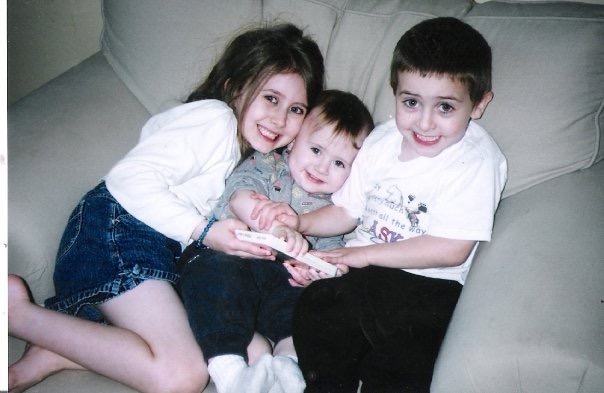
  • I have two younger brothers and we were all raised by our mom and dad.
  • Back home in Asheville, my family has 4 dogs, 5 cats, and 7 guinea pigs!
  • I am a vegetarian and try to be vegan when possible.
  • Fun fact: I can say the alphabet backwards! I learned how to do this because my mom learned as an only child growing up and I was determined to say it as fast as her (still working on this!).
  • After teaching in my own classroom for several years, some day I would like to become a Reading Specialist!

Contact Me

← Back

Thank you for your response. ✨

Design a site like this with WordPress.com
Get started