Don’t be polite.
Bite in.
Pick it up with your fingers and lick the juice that
may run down your chin.
It is ready and ripe now, whenever you are.You do not need a knife or fork or spoon
or plate or napkin or tablecloth.For there is no core
– “How to Eat a Poem” by Eve Merriam
or stem
or rind
or pit
or seed
or skin
to throw away.
I love this poem by Eve Merriam, “How to Eat a Poem,” because what it is saying about poetry is that it is consumable, it is ready for you, it isn’t polite (and neither should you be). Readers should feel free to delve into poetry, headfirst and unafraid. In this post, I want to examine my personal feelings about poetry, and how those have an impact on the way that I will teach it in my classroom.
Reading Poetry
I love reading poetry because it is so open and deep and can look like so many different things. It can be beautiful or angry, raw or delicate, melancholy or exuberant, structured or free, simple or complex. Poetry allows its readers to connect deeply to its contents and make their own connections or inferences about what its verses mean.
How Do I Know When I’ve Read a Really Good Poem?
I know when I’ve read a really good poem by the way it makes me feel—it gives me some sort of emotional reaction, whether that is a positive or a negative feeling. It sort of hits you in the gut. It makes you think about life in some way: your life, others’ lives, Life in general. The words used in the poem are a good indicator, as well: are they commonplace, passive, or weak; or are they vibrant, strong, and taking an active voice? A good poem uses those strong verbs and adjectives to illustrate a picture in the reader’s mind—it is obvious that the poet put a lot of thought into each word they wrote. The poet uses different senses to help the reader feel like they are in the poem. Take, for example, the poem “as a child, i smelled the air” by Jacqueline Woodson in brown girl dreaming (2016):
Mama takes her coffee out to the front porch
sips it slow. Two steps down and her feet
are covered in grass and dew.
New York doesn't smell like this, she says.

I follow her, the dew cool against my feet
the soft hush of wind through leaves
my mother and I
alone together.

Her coffee is sweetened with condensed milk,
her hair pulled back into a braid,
her dark fingers circling her cup.
If I ask, she will hold it to my lips,
let me taste the bittersweet of it.

It's dawn and the birds have come alive, chasing
each other from maple to pine and back
to maple again. This is how time passes here.
The maple will be bare-branched come winter,
Mama says. But the pines, they just keep on living.

And the air is what I'll remember.
Even once we move to New York.

It always smelled like this, my mother says.
Wet grass and pine.

Like memory.
Sometimes the poem is a puzzle or mystery or adventure that the reader is meant to decipher. Even the breaks between lines can make for a good poem—with thoughtful placement, breaks in a poem, whether line to line or stanza to stanza, give pause to the reader in their reading of the poem… and those pauses are what make the reader think more deeply about what they are reading, creating stronger connections and imagery.
Writing Poetry
In addition to reading poetry, I also love writing it. As I mentioned above, poetry can look like many different things, and writing poetry provides me with a way to write whatever is on my heart in a way that is unlimited. One thing I am working on in my writing of poetry, however, is expanding my understanding of types of poetry; I know about haikus and free verse (free verse is my favorite kind of poetry), but I feel limited in my knowledge of other forms, such as limericks, sonnets, blank verse, and others. As I continue to expand in my poetry abilities, I hope to learn more about these and other types of poetry.
I also really enjoy writing imitation poems, which are poems that are written from studying other existing poems and adopting its form for a writer’s own personal writing. I find such inspiration in reading mentor poems and using their form to write my own poetry. I have included two of my most recent examples of some imitation poems below:
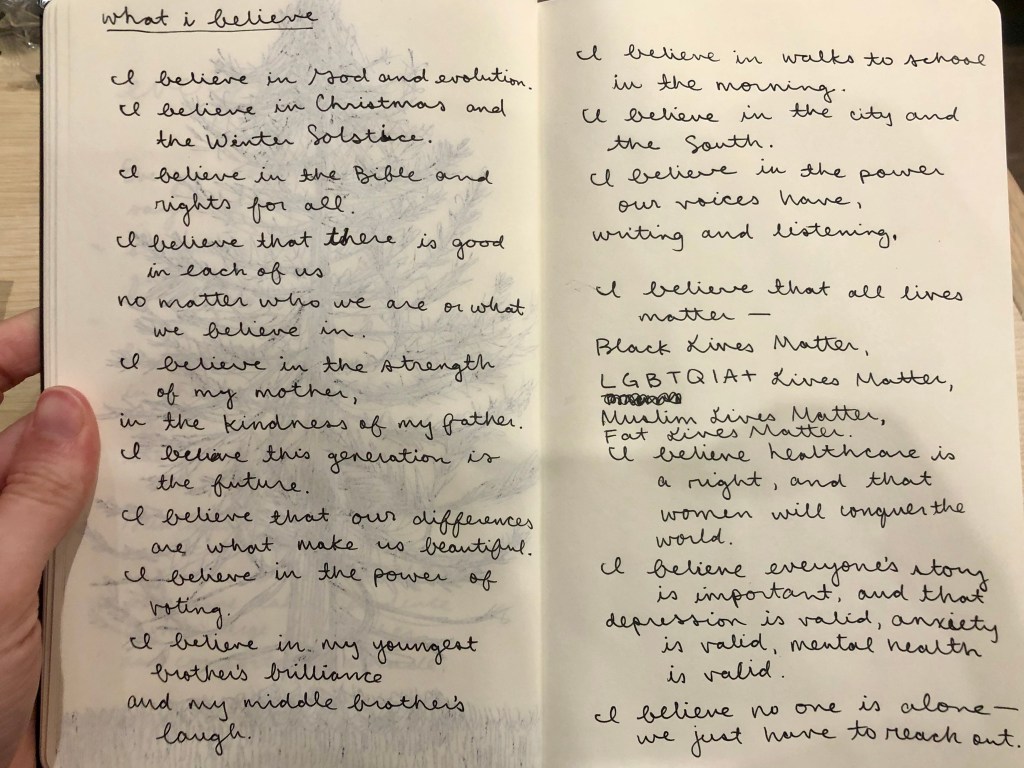
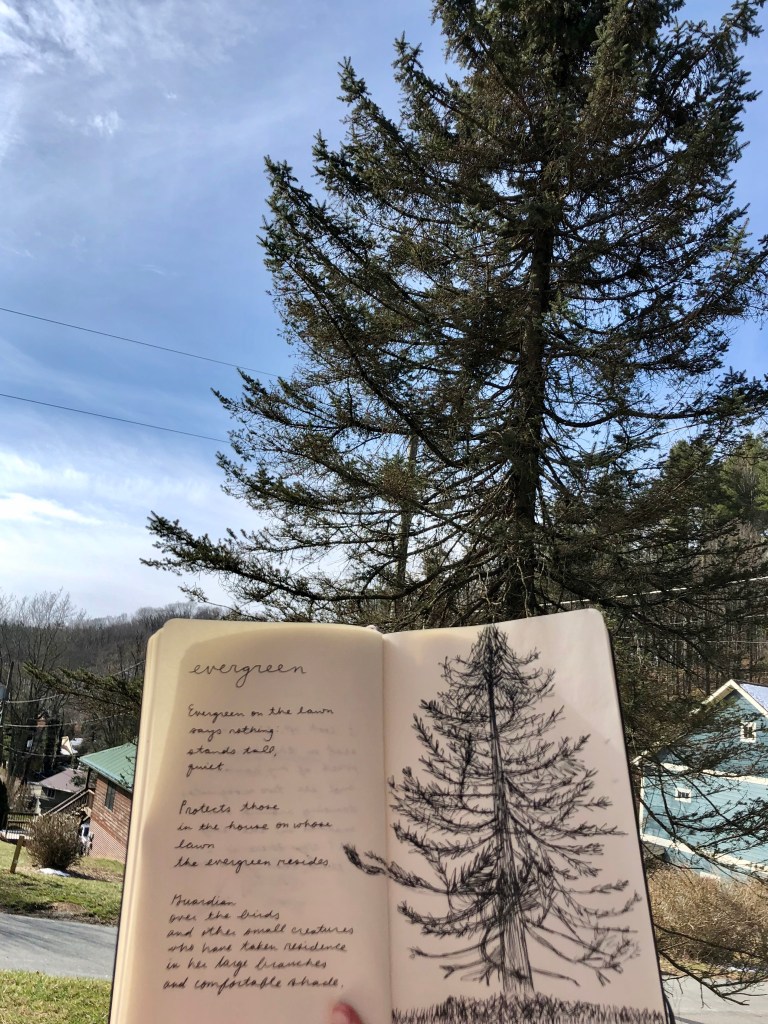
Teaching Poetry
I am extremely excited to teach poetry in my classroom. Because I enjoy reading and writing poetry so immensely, I hope to convey that excitement to my students and get them as excited about it as I am. I will admit, however, that I am definitely nervous about it, too! As I said, I feel as though I do not know enough about various types of poetry like blank verse and limericks, and at this point I am nervous to attempt to teach it to my students. I do find it to be very important for my students to learn about, as it is such a great medium for expressing oneself; however, I do feel that I need to learn more about those poetry types before I begin teaching students about them.
Creating a “Poetry Environment” in My Classroom
As I mentioned, I hope to convey my admiration for poetry to my students in my future classroom to get them as pumped up about it as I am. I think a large part of teaching any subject or topic is how enthusiastic about it a teacher is; however, there is obviously more to it than being excited. I hope to invite students to the poetry writing process and make them feel welcomed into its form, in order to create the “poetry environment” that I desire in my classroom. I plan to do this by reading poetry with my students each day, poetry they can relate to and which provokes an emotional reaction within them. I want to remind my students constantly that their writing is important and that poetry can provide them with so much freedom of expression. I want students to see the value of poetry and for them to feel excited about reading and writing poetry, not just in our classroom but also in their own lives as well.
References
How to eat a poem by Eve Merriam. (n.d.). The Nellen Family Jewels. https://www.tnellen.com/cybereng/poetry/eatpoem.html
Woodson, J. (2016). Brown Girl Dreaming (2nd ed.). New York, NY: Puffin Books.
 Ms. Schmidt's Reading Blog
One thought on “Poetry Reflection”