“Good writing will come from finding fresh new things to say about a topic and from knowing how to write about the topic in different ways for different audiences.”
–Mentor Texts, p. 47 (Katie Wood Ray, Wondrous Words)
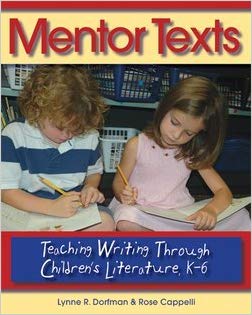
Every good writer writes from their own experiences: things they did, things that happened to them, things they read from a mentor text. In chapter 3 of Mentor Texts: Teaching Writing Through Children’s Literature, K-6 (2007), Dorfman and Cappelli discuss these “writing territories,” which they describe as “the treasure chests of their hearts and minds where they store precious memories about people, places, events, and objects” (p. 48). These writing territories are broad concepts or topics that anyone can write about, but can produce many, many story seeds—”the kernels of rich ideas that can grow and blossom into narratives, poems, letters, and articles” (p. 48)—that are unique to each individual.
For example, some writing territories I am familiar with:
- family
- friends
- home
- pets
- things I am good at
- animals
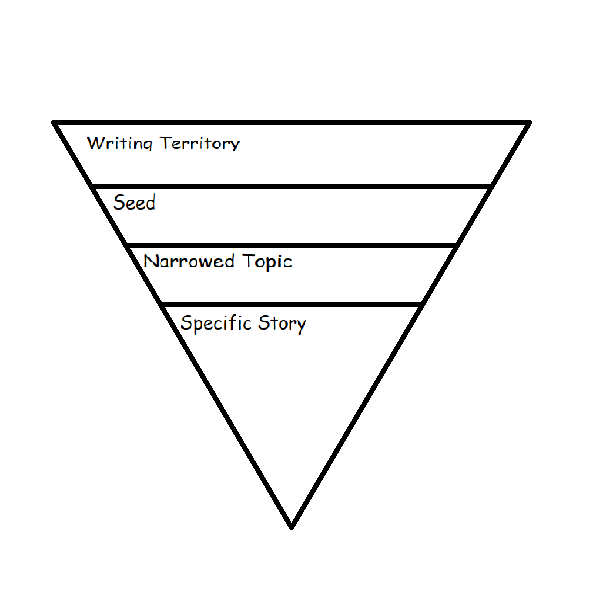
As you can see, while these topics have specific meaning to me, they are relatable to any writer. It is those specific seeds we find from our writing territories that we choose to write about. Once we have some writing territories to utilize up our sleeves, we must narrow our topic down to tell a special and unique story. Dorfman and Cappelli refer to an inverted triangle graphic organizer (p. 51-52) writers can use to narrow a chosen territory, zooming in on the one story they plan to write about on one particular day.
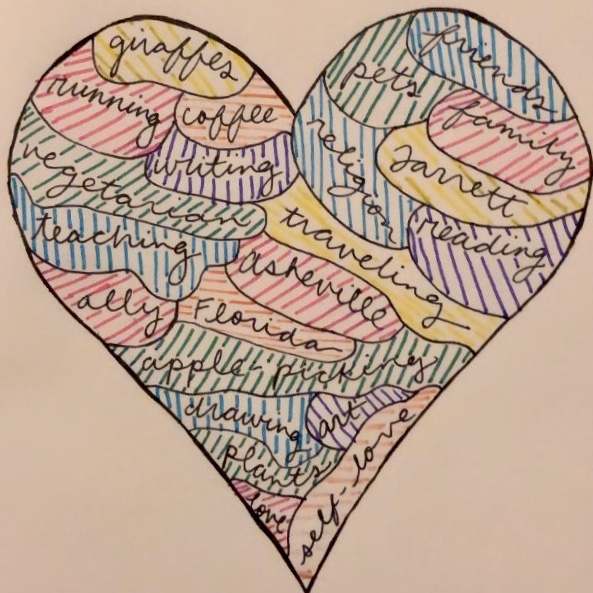
One way to find writing territories is by creating a heart map. This is a visual display of the things from a writer’s heart that they care deeply about—memories of family, where they grew up, people they’ve met, and more.
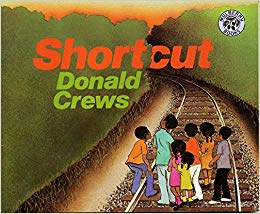
Alternatively, as I’ve mentioned in my previous two blogs, using a mentor text always helps us to think of topics for our writing, especially when a teacher helps give us a prompting question to think about in relation to the text. Stories generally have a “point” they want to get across—this could be found in the title, in the last line of the text, or inferred throughout the reading. Teachers can use this “point” to come up with a probing question for a classroom of writers. For example, the #OwnVoices picture book Shortcut by Donald Crews tells the true story of Crews’ own story about taking a shortcut home along the train tracks and getting trapped between the oncoming train and safety. After reading this book with the class, the teacher can ask probing questions such as:
- Have you ever done something foolish or dangerous (maybe to try to avoid getting in trouble)?
- Were you ever worried about something and everything turned out okay?
Students can do a quick write in their Writer’s Notebooks before having a group discussion or using their quick write as a first draft for a longer story.
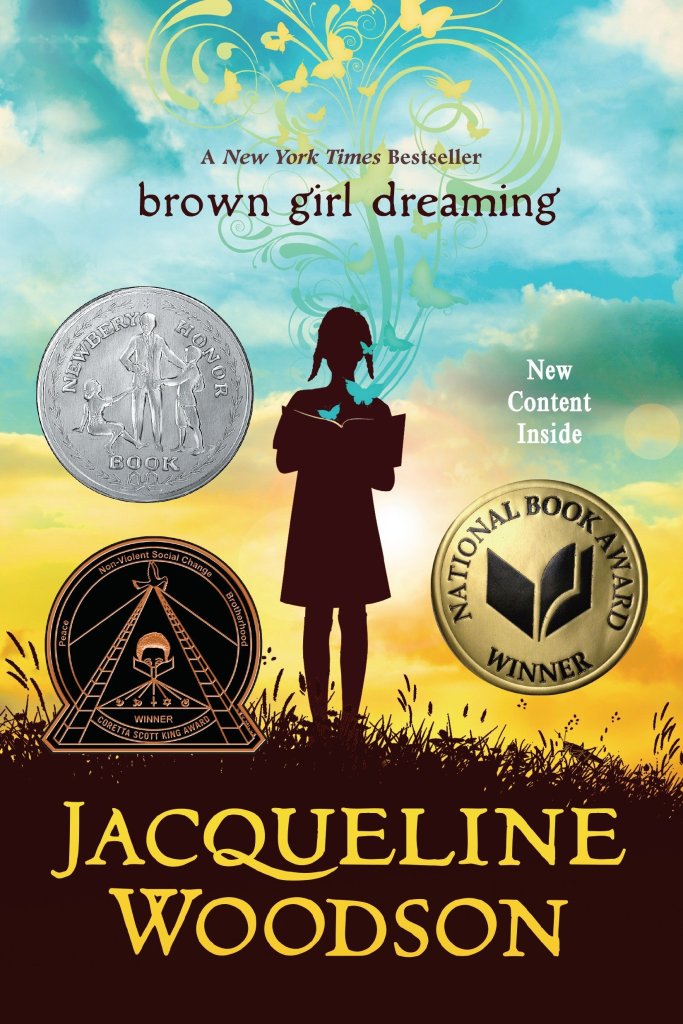
Like my previous post, I’ve got to mention brown girl dreaming (2016) by Jacqueline Woodson. I’ve gotten through Part II, “the stories of south carolina run like rivers” and so far, it’s my favorite section of the book. There’s so much to love! The whole time I was reading it I kept thinking of the ways in which I could relate to Woodson’s experiences: coming back to a home that wasn’t really home at all because everyone else has gone away (p. 46-47), southern cooking, the smells of home (p. 95), changes (p. 108-109), family dynamics (p. 122-123), and why we tell stories (p. 134).
The whole section tells stories about Woodson’s experiences growing up as an African American in the South during the 60s, specifically living with her grandparents in Greensboro. It is reminiscent almost of an extended version of a “Where I’m From” poem, like this one by George Ella Lyon. Students can draw inspiration from Lyon and Woodson alike and write their own “Where I’m From” poems, like the one I wrote below:
Where I'm From
I am from scratching posts,
         from The Princess Bride and Circle in the Square.
I am from the pictures all over the walls
         (Scattered, beautiful,
         it feels like a home.)
I am from the cosmos in the backyard,
         the morning glories
         that my mother would preen over like they were her children.

I'm from the Chinese food and A Christmas Story
         from Kristi and Ken.
I'm from the smart alecks
         and the have-to-be-rights,
from Don't chew with your mouth open! and You are loved.
I'm from atheism turned agnosticism,
         to finding my own spirituality and faith.

I'm from Orlando and Beer City, USA,
         mashed potatoes and tomato sandwiches.
From the mom my mother lost
         at 10 to an aneurysm,
the hip my father had replaced
         as a teenager.

In the photo album my parents
         kept to show my brothers and I where we came from.
I am from those memories—
         sweet, childhood play—
         knowing I am loved.
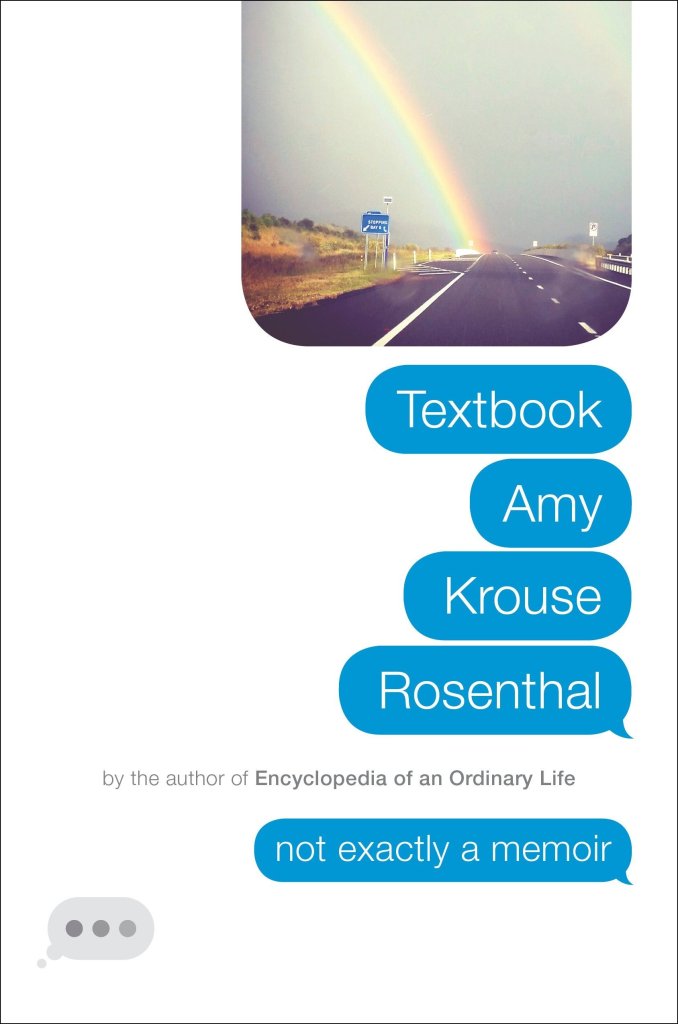
I want to end this post with a quote from Textbook Amy Krouse Rosenthal (2016) that I think summarizes all the readings and writing ideas I have mentioned really nicely:
“Just look at us, all of us, quietly doing our thing and trying to matter. The earnestness is inspiring and heart-breaking at the same time.”
–Textbook Amy Krouse Rosenthal, p. 121
I want my students to know that what their actions and their voices really do matter. I want them to know that their writing is important and that their stories have value. I think this is what we are all striving for as teachers of writing.
References
Crews, D. (1992). Shortcut. New York, NY: HarperCollins Publishers.
Dorfman, L. R., & Cappelli, R. (2007). Chapter 3: What are you really writing about? Discovering the inside story. In In Mentor texts: Teaching writing through children's literature, K-6 (pp. 47-68). Portland, ME: Stenhouse Publishers.
Rosenthal, A. K. (2016). Textbook Amy Krouse Rosenthal. New York, NY: Penguin Random House.
Woodson, J. (2016). Brown Girl Dreaming (2nd ed.). New York, NY: Puffin Books.
 Ms. Schmidt's Reading Blog
One thought on “Writing Territories & Where I’m From”