“If you think you’re a girl… Then I think you’re a girl too!”
-Alex Gino, GEORGE
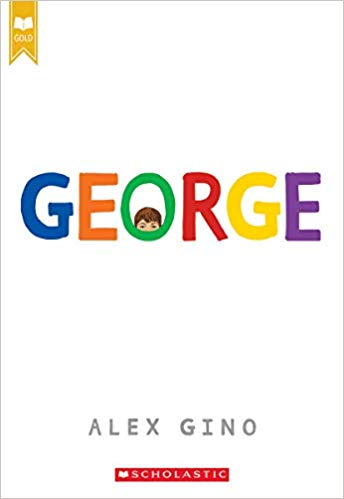
Written in 2015 by Alex Gino, GEORGE is a novel about a transgender girl named Melissa and her emotional process of coming out. Melissa, whose birth name is George, is in the fourth grade and, along with her best friend Kelly, wishes to be in the school’s play based on the book Charlotte’s Web by E.B. White—but she wants to play Charlotte. The problem is, no one knows Melissa is a girl. But with the help of Kelly, the first person Melissa comes out to, they devise a plan to get Melissa as the lead and prove to her mother that she is a girl. GEORGE does an exceptional job at displaying the intricacies of being closeted, especially as a child: the feelings of being uncomfortable with your body, the heart-sinking feeling every time someone misgenders you, and the lack validity experienced when someone you love dismisses your identity.

The author of GEORGE, Alex Gino, is genderqueer, which means that they embrace a fluidity of gender identity. One of the things I love most about this book is that it is a wonderful #OwnVoices representation for the LGBTQIA+ community! GEORGE has received many awards, including the Stonewall Book Award for its exceptional merit relating to the LGBT+ experience. Gino is coming out in April 2020 with a new book, RICK, which will be a companion novel to GEORGE that focuses on the boy who was best friends with Melissa’s bully Jeff. Melissa will be a featured character in the novel, but as it says on Gino’s website, “her life is going too well for there to be enough plot and/or struggle to write another book about her right now” (2019). I am so excited to read this companion piece! You can read more about Gino on their website here.
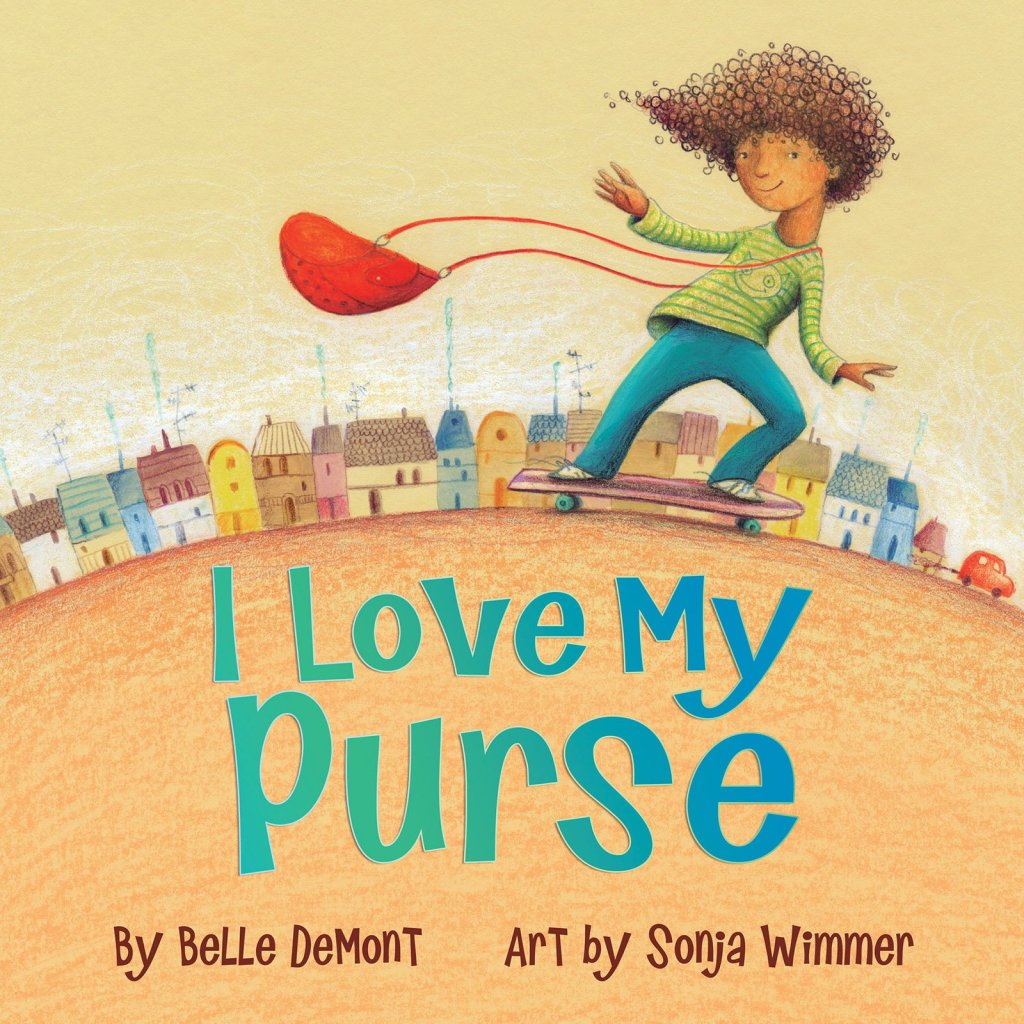
I Love My Purse (2017), written by Belle DeMont and illustrated by Sonja Wimmer, features a boy named Charlie who decides one morning that “enough is enough,” and takes the bright red purse given to him by his grandma out of his closet to wear to school. The picture book highlights the different people Charlie encounters throughout the day, including his dad, who all tell him the same thing: boys don’t wear purses. Charlie always responds with the same statement: “But I love my purse!” As the book goes on, the same people who told Charlie boys don’t wear purses begin to be inspired by Charlie expressing himself how he wants to, regardless of society’s expectations—his dad wears his favorite Hawaiian shirt to work, the girl in his class wears her beloved face paint to school, the boy from the upper grades cooks in the cafeteria, and the crossing guard wears his favorite sparkly shoes! This book does a great job at reminding readers that it is good to be yourself, even if the expression of that goes against what society has normalized.
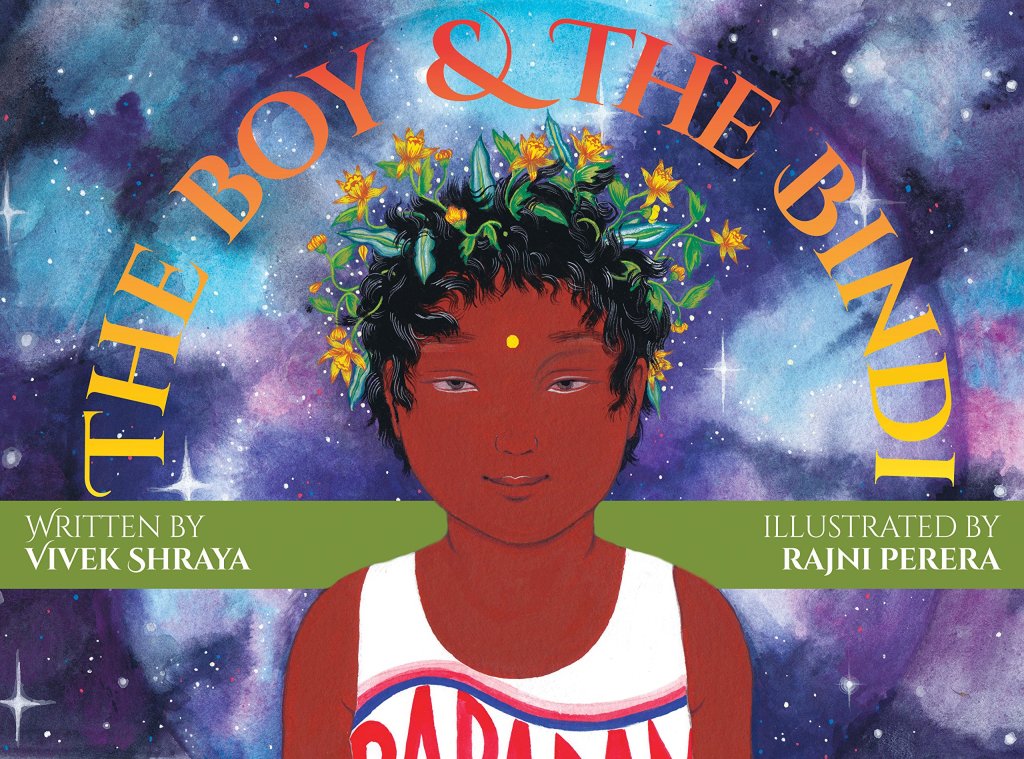
Vivek Shraya’s The Boy & the Bindi (2016), illustrated by Rajni Perera, is about an Indian boy who wishes to wear, like his Ammi, a bindi above his nose. A bindi is a dot, which can come in many colors, and is typically worn by women in Indian culture. The boy’s Ammi says, “My bindi keeps me safe and true” (p. 10). Written in prose and with no specific pronouns to describe the boy, this picture book is purposely left open by Shraya to the boy being a boy who likes “girl things” or a transgender girl. Shraya, who is a transgender woman with Indian heritage, wrote this book after she began wearing a bindi herself and began to get very strange looks from people on the street. Shraya wanted to take the experience and highlight the beauty of bindis for all who wear them. Check out the interview and book reading with Shraya below!
How can I apply lessons from these books to my own classroom?
These books are all so special and important to have highlighted in our classrooms. It is also important for us as educators to learn and understand terms and definitions, to cultivate “gender inclusivity because it provides context and clarity and opens a space in hearts and minds for all genders” (Stachowiak, p. 29). For an updated list of LGBTQ+ definitions, click here to visit the Trans Student Educational Resources (TSER) web page.
While GEORGE ends on a gratifying note, it is left open to the many possibilities of the world: Melissa seems like she is on a path to being her true and happy self, but the cynic in me is also afraid for her. The world is a scary and cruel place many times, unfortunately. I was left wondering about how Melissa’s father, who was mentioned but not featured in the novel, would react to Melissa’s coming out. Would her identity be honored and respected by both her parents? This made me think about an article by Vox that just came out about a court battle over that exact question: “When one parent honors her child’s gender identity and the other does not, what does that mean for the child? More specifically, what will it mean for her socialization, her mental well-being, and who she’s allowed to be?” (2019). The article is an extremely interesting read, and I highly recommend reading it in order to have a better understanding of not only the social ramifications children experience by coming out as transgender but the legal implications as well.
As teachers, we must use quality children’s books in our classrooms that act as “mirrors, windows, and sliding glass doors” (Bishop, 1990) for all our students. This includes our LGBTQIA+ students. They need to have mirror books that reflect their identities, and students who do not identify as queer need to have window books that show them other ways of living in a respectful manner. Not only must we have these books readily available in our classroom libraries but, according to Hermann-Wilmarth and Ryan, we must:
- Include and contextualize LGBT texts,
- Read “straight” books through a queer lens, and
- “Queer,” or bring a queer lens, to LGBT-inclusive texts (2015).
The more we normalize and validate the lives of LGBTQIA+ people in our classrooms, the more accepting a safe a world will be for our students. As Evans, Gilbert, and Doyle say in their article, “Discovering Their Identity” (2017), “Teachers must continually search for, choose to read, and discuss new books with messages that are supportive of all kinds of differences—and hopefully, share those titles with other teachers and parents” (p. 21). These three books are a start to just that.
References
Bishop, R. S. (1990). Mirrors, windows, and sliding glass doors. Perspectives, 6, ix-xi.
Burns, K. (2019, November 11). What the battle over a 7-year-old trans girl could mean for families nationwide. Retrieved November 11, 2019, from https://www.vox.com/identities/2019/11/11/20955059/luna-younger-transgender-child-custody
Demont, B. (2020). I love my purse. Toronto, Canada: Annick Press.
Evans, S., Gilbert, S., & Doyle, T. (2017). Discovering their identity: Using gender nonconforming picture books in early education classrooms. Literacy Today, 20-21.
Gender Spectrum. (2017, June 7). The boy & the bindi [Video file]. Retrieved from https://youtu.be/UIquybKDbhY
Gino, A. (2015). George. New York, NY: Scholastic Press.
Gino, A. (2019). RICK. Retrieved from http://www.alexgino.com/books/rick/
Hermann-Wilmarth, J. M., & Ryan, C. L. (2015). Doing what you can: Considering ways to address LGBT topics in language arts curricula. Language Arts, 92(6), 436-442.
Shraya, V. (2016). The boy & the bindi. Vancouver, Canada: Arsenal Pulp Press.
Stachowiak, D. (2018). The power to include: A starting place for creating gender-inclusive literacy classrooms. Literacy Today, 28-30.
 Ms. Schmidt's Reading Blog
One thought on “Being Who You Are”